Managing several case fans can quickly turn into a tangle of splitters, headers, and software controls. The best PC fan controllers with remote controls simplify that setup by combining fan expansion with convenient lighting adjustments from outside the case.
This roundup compares 10 controller hubs across port counts, PWM and ARGB support, remote-control options, motherboard synchronization, and installation features, helping you choose a practical match for your PC build.
Best 10 PC Fan Controllers with Remote Controls Picks for 2026
Simple ARGB Remote Pick
Plug-and-Play 5V ARGB Controller
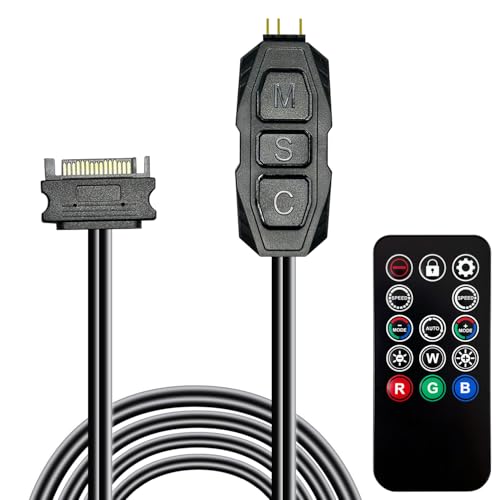
- 215 dynamic modes and four static colors
- 14-key remote with SATA power
- Compact, tool-free installation
Best For: Remote-controlled ARGB lighting on 5V 3-pin devices
10-Port Control Hub
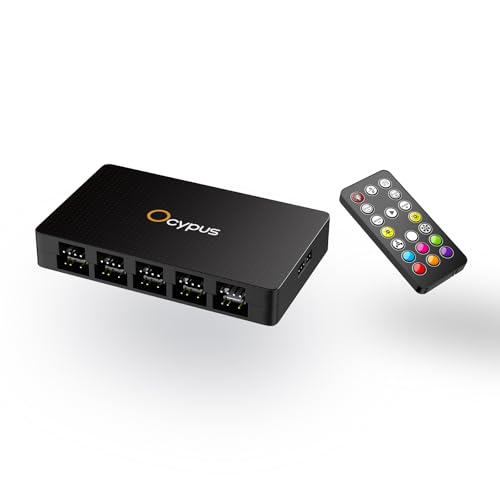
- 10 PWM fan and 10 ARGB ports
- 19-key remote for lighting controls
- Magnetic mount with port protection
Best For: Large 5V ARGB and 4-pin PWM fan setups
Balanced 12-Device Hub
Thermalright ARGB and PWM X12 IR Hub

- Combines ARGB and PWM expansion
- Supports up to 12 device groups
- Includes IR lighting remote
Best For: Tidy combined fan and ARGB control
High-Capacity Fan Hub
DARKROCK 20-Port PWM and ARGB Hub
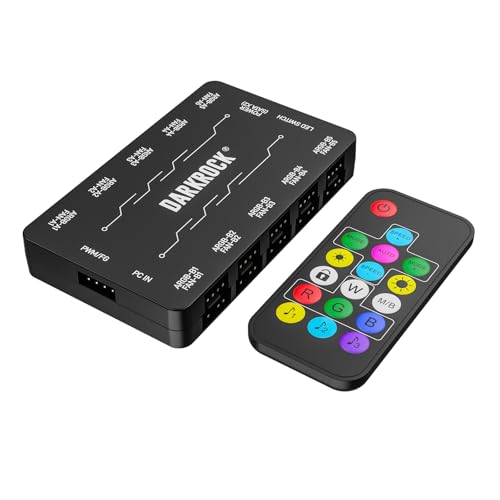
- 10 PWM and 10 ARGB ports
- Dual SATA power for stable operation
- Remote fan-speed and lighting control
Best For: Large cases with many PWM fans and ARGB devices
Best Remote ARGB Lighting Kit

- Dynamic modes plus 12 static colors
- Wireless control for brightness and speed
- SATA-powered 5V 3-pin ARGB compatibility
Best For: Independent remote lighting control in custom PC builds
Best for Everyday Use
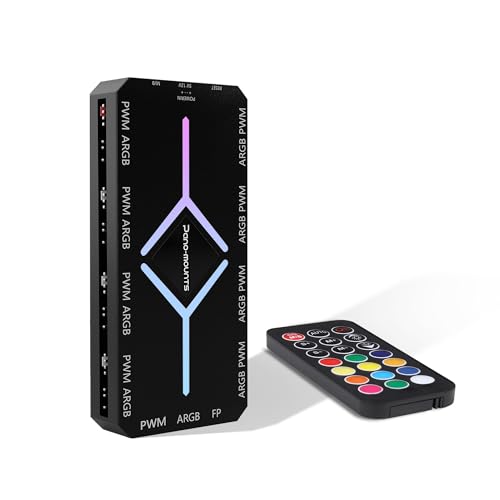
- Nine PWM and nine ARGB ports
- Remote control for speed and lighting
- Magnetic mounting with SATA power
Best For: Centralized control in multi-fan PC builds
Best Cable-Management Hub
Thermalright ARGB and Fan HUB X8

- Eight PWM and 5V ARGB connection groups
- Magnetic mounting helps organize cables
- Remote included for lighting-color control
Best For: Expanding and tidying fan and ARGB connections
Best Integrated Control

- Controls up to 10 PWM fans and 10 ARGB devices
- Remote, chassis-button, and motherboard-sync control
- Magnetic mount with SATA power
Best For: RGB-focused builds needing broad expansion and flexible controls
Best High-Load Stability

- Connects up to 10 groups of ARGB fans
- RF remote adjusts speed and lighting
- Dual SATA inputs support full-load operation
Best For: Multi-fan builds prioritizing stable power and remote control
Best for Fan Expansion

- Offers 12 PWM and 12 5V ARGB interfaces
- Magnetic adhesive supports simple installation
- Remote is for lighting; SATA cable is not included
Best For: Expanding headers and organizing cables without advanced adjustment
Simple ARGB Remote Pick – Plug-and-Play 5V ARGB Controller
If you need pc fan controllers with remote controls mainly for lighting, this compact ARGB controller offers a straightforward, tool-free setup. It uses SATA power and supports 5V 3-pin ARGB fans, strips, coolers, and other compatible devices, with 215 dynamic modes and four static colors.
Best For: Builders who want inexpensive remote-controlled ARGB effects without adding a complicated control system.
Pros:
- Includes a 14-key remote for colors and lighting modes.
- Offers 215 dynamic effects plus four static colors.
- Uses SATA power and installs without tools.
- Compact design is easy to hide inside a case.
Cons:
- Controls lighting only; the supplied notes do not describe PWM fan-speed control.
- Limited to 5V 3-pin ARGB devices and does not support 12V 4-pin RGB equipment.
This is a sensible choice when remote lighting control is the priority. Confirm your components use the 5V 3-pin ARGB standard before ordering.
10-Port Control Hub – Ocypus Delta EH10 PRO Fan Hub
For larger builds, the Ocypus Delta EH10 PRO is one of the more capable pc fan controllers with remote controls in this group. It provides 10 PWM fan ports and 10 ARGB outputs, with SATA power, magnetic mounting, and a remote for lighting adjustments.
Best For: Multi-fan PC builds using 5V 3-pin ARGB lighting and 4-pin PWM fans.
Pros:
- Expands a system to 10 PWM fan ports and 10 ARGB outputs.
- 19-key remote controls lighting, brightness, speed, and modes.
- Individual ARGB-port short-circuit and overload protection is included.
- Magnetic mounting and compact dimensions simplify installation.
Cons:
- Only the white FAN 1 port reports PWM fan speed.
- Requires a motherboard with 5V 3-pin ARGB support.
- Does not support 12V 4-pin RGB headers, which must not be connected.
The EH10 PRO stands out for port capacity and safety features, but connector compatibility is critical. Check both your ARGB and PWM connections before installation.
Balanced 12-Device Hub – Thermalright ARGB and PWM X12 IR Hub
The Thermalright X12 IR combines ARGB lighting and PWM fan expansion in a single hub, making it a practical option among pc fan controllers with remote controls. It supports up to 12 groups of compatible devices, uses SATA power, and can synchronize lighting and fan speed through the motherboard connections.
Best For: Users who need tidy cable management and combined ARGB/PWM expansion for a desktop build.
Pros:
- Supports ARGB devices and PWM fan interfaces in one hub.
- Connects up to 12 groups of CPU fans according to the supplied product notes.
- Helps synchronize 5V 3-pin ARGB lighting and PWM fan speed.
- Includes an IR remote for lighting color control.
Cons:
- Only the fan connected to the red recognition port has its speed reported.
- Does not support 12V 4-pin RGB devices.
- The supplied notes emphasize lighting control for the remote rather than full remote fan-speed adjustment.
This hub is a good middle ground for combining fan and lighting expansion while keeping cables organized. Verify that your motherboard and devices use the supported 5V ARGB and PWM standards.
High-Capacity Fan Hub – DARKROCK 20-Port PWM and ARGB Hub
The DARKROCK 20-Port hub is designed for systems with many fans and lighting devices. It provides 10 ports for 4-pin PWM fan-speed control and 10 ports for 5V 3-pin ARGB lighting, while dual SATA power supports stable connection to the power supply.
Best For: High-fan-count cases that need separate expansion for PWM cooling and addressable RGB lighting.
Pros:
- Offers 10 4-pin PWM fan ports and 10 5V 3-pin ARGB ports.
- Dual SATA power is designed for stable hub operation.
- Remote control adjusts PWM fan speed and ARGB effects.
- Magnetic backing allows direct attachment inside the case.
Cons:
- Supports only 5V 3-pin ARGB, not 12V RGB components.
- Requires motherboard connections for the 12V 4-pin PWM and 5V 3-pin ARGB control signals.
Choose the DARKROCK when port count matters more than a minimal setup. Its 20-port layout is useful for larger builds, provided all lighting components are 5V addressable RGB.
Best Remote ARGB Lighting Kit – 21-Key Remote RGB Controller
For shoppers comparing pc fan controllers with remote controls, this GSCOLER ARGB controller is a straightforward choice for 5V 3-pin lighting devices. It runs from SATA power, works without motherboard ARGB support, and provides wireless control over dynamic effects, static colors, brightness, and speed.
Best For: DIY builders who want independent remote control of ARGB fans, coolers, strips, or other 5V 3-pin lighting.
Pros:
- Offers dynamic lighting modes and 12 static color options.
- Includes a wireless 21-key remote for brightness, speed, color, and mode adjustments.
- Plug-and-play SATA and 5V 3-pin connections require no software setup.
- Compact housing and copper wiring help reduce case clutter.
Cons:
- Supports 5V 3-pin ARGB devices, not 12V 4-pin RGB hardware.
- Designed primarily for lighting control rather than dedicated fan-speed management.
This is a practical option when remote lighting control matters more than motherboard integration. Its broad 5V ARGB compatibility and simple installation make it well suited to custom lighting upgrades.
Best for Everyday Use – 9-Port PWM & ARGB Remote Hub
Among pc fan controllers with remote controls, this 9-port hub stands out for builders running several fans. It combines nine PWM ports and nine ARGB ports, uses SATA power for stable operation, and adds magnetic installation for convenient chassis placement.
Best For: Multi-fan PC builds needing centralized remote speed and lighting control with optional motherboard software synchronization.
Pros:
- Controls up to nine fans through dedicated PWM and ARGB ports.
- Includes a remote for centralized fan-speed and RGB-lighting adjustments.
- Magnetic backplate supports quick installation on a metal chassis.
- Compatible with ASUS Aura Sync, MSI Mystic Light, and Gigabyte RGB Fusion.
Cons:
- Requires available SATA power and compatible 5V ARGB connections.
- The supplied details list a one-year manufacturer warranty, despite a separate two-year support claim.
This hub is a strong fit when a build has more fans than the motherboard can conveniently accommodate. Its port count, SATA power input, magnetic mounting, and remote make it a flexible central control point.
Best Cable-Management Hub – Thermalright ARGB and Fan HUB X8
This Thermalright hub is worth considering among pc fan controllers with remote controls when cable organization is the priority. It expands connections for up to eight groups of 4-pin PWM fans and 3-pin 5V ARGB devices, while the included remote handles lighting color.
Best For: Builders who need cleaner fan and ARGB wiring with motherboard synchronization and basic remote lighting control.
Pros:
- Provides eight fan-power and ARGB connection groups.
- Supports 4-pin PWM fans and 3-pin 5V ARGB lighting.
- Soft magnetic adhesive enables flexible chassis mounting.
- Includes a remote for convenient lighting-color control.
Cons:
- Does not support 12V 4-pin RGB devices.
- The notes state that it does not control fan speed or adjust lighting directly; it expands interfaces and supports synchronization.
- Only the fan connected to the red interface is recognized for speed reading.
The X8 is best viewed as an expansion and organization hub rather than a standalone speed controller. Choose it for tidy wiring, expanded connectivity, and synchronized PWM/ARGB operation when its control limitations fit your setup.
Best Integrated Control – 10-Port ARGB/PWM Hub
For builders comparing PC fan controllers with remote controls, this 10-port hub combines PWM fan management and 5V ARGB lighting in one centralized unit. It adds remote, chassis-button, and motherboard-sync control, while the magnetic mount helps keep installation tidy.
Best For: RGB-focused builds needing broad fan and lighting expansion with several control options.
Pros:
- Supports up to 10 PWM fans and 10 5V ARGB devices.
- Includes remote control, chassis-key control, and motherboard synchronization.
- Magnetic mounting enables tool-free placement inside compatible metal cases.
- SATA power supports multiple connected devices.
Cons:
- Does not support 12V 4-pin RGB devices.
- ARGB plugs must be aligned correctly with the hub’s 5V mark.
- PWM operation requires connecting the designated red PWM fan port first.
This is the most feature-rich option of the three for users who want centralized cooling and lighting control. Its 10-device capacity and flexible mounting are particularly useful in larger RGB builds.
Best High-Load Stability – 10-Channel RF Fan Hub
This magnetic hub is a practical choice among PC fan controllers with remote controls when stable power delivery matters. It connects up to 10 groups of ARGB fans and combines PWM speed adjustment with remote lighting control, while dual SATA inputs are designed for full-load operation.
Best For: Multi-fan PC builds where stable power input and RF remote operation are priorities.
Pros:
- Supports up to 10 groups of case ARGB fans.
- Provides PWM speed adjustment and ARGB synchronization.
- Includes an RF remote for fan-speed and lighting adjustments.
- Dual SATA inputs support power needs under full load.
Cons:
- Uses a plastic housing rather than a metal enclosure.
- Requires two SATA power connections for its dual-input design.
- The supplied notes do not specify motherboard RGB ecosystem compatibility.
Choose this model if you are building around multiple fans and want extra emphasis on power stability. Its magnetic installation and RF remote keep the controller accessible without adding much setup complexity.
Best for Fan Expansion – Thermalright X12 IR Hub
The Thermalright X12 is worth considering among PC fan controllers with remote controls when your main goal is adding connections and tidying cables. It offers 12 PWM and 5V ARGB interfaces, magnetic adhesive mounting, and a lighting remote, but it is not intended for active fan-speed or RGB adjustment.
Best For: Users who need extra fan and ARGB headers with synchronized operation and simple lighting control.
Pros:
- Provides 12 4-pin PWM and 12 5V 3-pin ARGB connections.
- Helps organize fan-power and lighting cables in one hub.
- Includes soft magnetic adhesive for flexible chassis mounting.
- Direct SATA output supports stable power under high loads.
Cons:
- SATA cable is not included and must be purchased separately.
- Does not support fan-speed control or RGB-lighting adjustment according to the supplied notes.
- 12V 4-pin RGB devices are not supported.
This hub makes sense for expanding a motherboard’s available connections rather than fine-tuning performance. Verify the SATA-cable requirement and the limited adjustment functionality before choosing it for a remote-control-focused setup.
How We Picked the Best PC Fan Controllers with Remote Controls
We focused on controller hubs that offer useful combinations of fan connectivity, lighting control, and remote operation. The selected models include compact splitters as well as larger 8-, 10-, 12-, and 20-port hubs, so the list covers compact gaming PCs, mainstream desktops, and fan-heavy builds.
We also considered connector compatibility, power delivery, mounting convenience, and whether a controller supports motherboard synchronization. Because fan and lighting standards differ, compatibility matters more than the number of ports alone.
Quick Comparison
| Feature | What to Look For |
|---|---|
| Fan capacity | Choose a port count that covers current fans plus reasonable future expansion. |
| Fan control | 4-pin PWM support enables motherboard-based speed control on compatible fans. |
| Lighting | 5V 3-pin ARGB is addressable and should not be confused with 12V 4-pin RGB. |
| Remote type | IR remotes need line of sight; RF remotes generally provide more flexible operation. |
| Installation | Magnetic mounting and SATA power can make cable management easier. |
Key Buying Factors for PC Fan Controllers with Remote Controls
Check Fan and Lighting Compatibility
Confirm whether your fans use 3-pin DC, 4-pin PWM, 5V 3-pin ARGB, or 12V 4-pin RGB connectors. A hub may support fan power but lack the correct lighting standard, or vice versa. Never connect a 5V ARGB plug to a 12V RGB header.
Match Capacity to Your Build
Count every case fan, radiator fan, and lighting device you intend to connect. Extra ports are useful for upgrades, but an oversized hub may add unnecessary cable clutter. Also verify the controller’s total power capability when connecting many fans.
Understand Remote and Motherboard Controls
A remote is convenient for changing colors, brightness, and effects without opening software. If you want temperature-based fan curves or synchronized lighting, choose a model with motherboard support and confirm that your motherboard has the required headers.
Prioritize Mounting and Cable Management
Magnetic backs are useful in steel cases, while SATA-powered hubs reduce the load on motherboard headers. Plan cable routing before installation and keep the controller accessible enough to replace batteries or use its receiver.
Who Should Buy Which PC Fan Controllers with Remote Controls?
Choose a compact splitter or lower-port hub for a small build with only a few fans. A mid-range 8- or 10-port controller is a sensible choice for most gaming PCs and provides room for additional fans. High-capacity 12- or 20-port hubs suit large cases, multiple radiators, or builds with many synchronized lighting devices.
Buyers who primarily want quick RGB adjustments should prioritize a dependable remote and clear lighting compatibility. Those who want automatic cooling control should favor PWM support and motherboard synchronization. If your build mixes fan brands, carefully verify connector standards and power requirements before choosing the highest-capacity option.