The best film scanner makes it easier to preserve family photographs, organize old negatives, and share slides without relying on a photo lab. The right choice depends on your film formats, desired image quality, workflow, and budget.
We compare ten film scanners ranging from straightforward LCD-equipped converters to dedicated 35mm scanners with advanced color-management tools, helping you find a practical match for your archive.
Best 10 Film Scanner Picks for 2026
Best All-in-One Film Scanner
Magnasonic FS71 24MP Film Scanner

- Handles multiple film and slide formats
- 5-inch display with HDMI viewing
- Fast scans and direct SD-card storage
Best For: Standalone family-photo archiving across varied formats
Best Professional Film Scanner
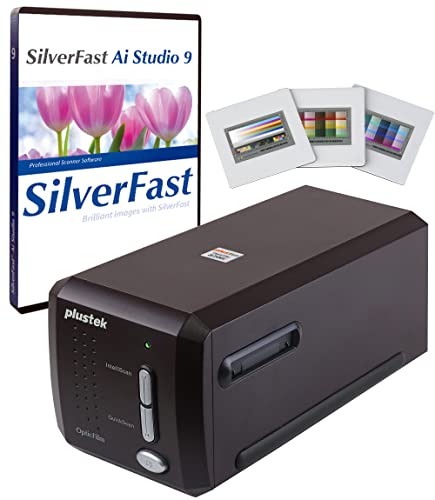
- 7200 resolution with 16-bit color depth
- Includes SilverFast 9 Ai Studio software
- Advanced IT8 calibration target included
Best For: Detailed 35mm archival and color-calibration work
Best Display Film Scanner
KODAK Slide N Scan Film Scanner

- Large 5-inch LCD with gallery mode
- Supports 135, 110, 126, and 50mm formats
- Includes adapters, cables, and cleaning brush
Best For: Easy home scanning and immediate photo preview
Best Touchscreen Film Scanner
HPFS500 Negative and Slide Scanner

- Standalone operation without a computer
- 5-inch all-angle LCD touchscreen
- Quick-load tray for batch scanning
Best For: Hands-on home digitization of mixed film formats
Versatile Format Pick
KODAK SCANZA Film & Slide Scanner
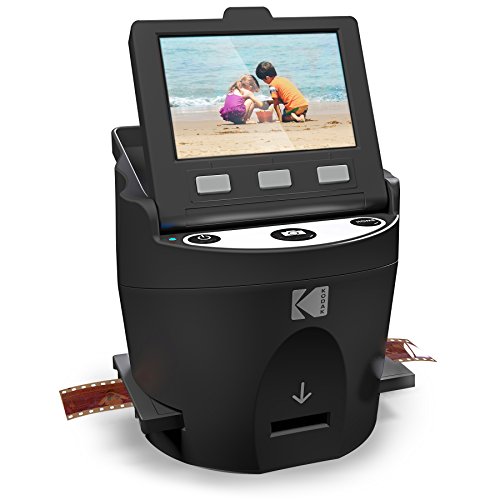
- Scans 35mm, 126, 110, Super 8, and 8mm formats
- Includes adapters, cables, and a cleaning brush
- Features a tilting 3.5-inch LCD and SD-card saving
Best For: Mixed-format film collections
Large-Screen Workflow Pick

- Uses a quick-feeding tray for continuous scanning
- Supports 135mm, 110mm, and 126mm film
- Adds a tilting 7-inch LCD and one-touch editing
Best For: Home archiving with easy viewing
Compact Portable Pick

- Scans 126 and 135 film at up to 16MP
- Saves directly to an SD card
- Includes basic color and image adjustments
Best For: Portable scanning of smaller film collections
High-Resolution Choice

- Up to 7200 dpi scanning
- Infrared dust and scratch removal
- SilverFast and QuickScan software included
Best For: Detailed 35mm film and slide archiving
Easy All-Format Option
DigitPro 22MP Film & Slide Scanner

- Supports multiple film formats
- 5-inch LCD for instant previews
- One-touch scanning with HDMI and USB output
Best For: Beginner-friendly family photo conversion
Portable Budget Pick

- Foldable and travel-friendly
- Uses a smartphone camera and LED light
- Supports 35mm slides and negatives
Best For: Casual, portable smartphone scanning
Best All-in-One Film Scanner – Magnasonic FS71 24MP Film Scanner
The Magnasonic FS71 is a practical film scanner for digitizing several common film and slide formats without a computer. Its built-in display, quick scanning workflow, and direct SD-card storage make it convenient for preserving family photo collections.
Best For: Users who want a standalone film scanner with broad format support and simple on-device adjustments.
Pros:
- Supports 35mm, 110, 126, and Super 8 negatives, plus 135, 126, and 110 slides.
- Offers a large 5-inch LCD screen and HDMI output for viewing on a TV or monitor.
- Scans in less than five seconds per image and saves JPEG files to an SD card.
- Includes brightness, RGB color, flip, and mirror adjustments without requiring editing software.
Cons:
- SD card and HDMI cable are not included.
- Its listed minimum system requirement is Windows 7 if using a computer.
With its fast-loading trays and standalone controls, the FS71 is well suited to casual home archiving. It is a particularly flexible choice when your collection includes more than standard 35mm film.
Best Professional Film Scanner – Plustek OpticFilm 8300i Ai
The Plustek OpticFilm 8300i Ai is a specialized film scanner for users who want high-resolution 35mm scanning and advanced software controls. Its calibration target, infrared-based processing, and bundled SilverFast software support more detailed archival work.
Best For: Serious 35mm film and slide digitization where resolution, color calibration, and image-processing tools matter.
Pros:
- Provides 7200-resolution scanning with 16-bit color depth and a CCD sensor.
- Includes SilverFast 9 Ai Studio and Plustek Quick Scan Plus software.
- Comes with a 2019 ISO 12641-2-compliant IT8 calibration target.
- Supports tools such as infrared iSRD, HDRi, 16-bit Histogram, Multi-Exposure, and NegaFix.
Cons:
- It is designed for 35mm slides and film rather than a broad range of formats.
- Advanced software may require more setup and learning than a standalone scanner.
- USB is the listed connection type, with no built-in display mentioned.
The 8300i Ai is the strongest fit for detail-focused users who are willing to work with computer software. Its calibration hardware and extensive processing features distinguish it from simpler home-use film scanners.
Best Display Film Scanner – KODAK Slide N Scan Film Scanner
The KODAK Slide N Scan is a user-friendly film scanner with a large 5-inch LCD screen for previewing, editing, and sharing images as you work. It supports several negative and slide formats and saves converted files directly to an SD or SDHC card.
Best For: Home users who prioritize an easy-loading workflow, a built-in viewing screen, and simple touch-button image adjustments.
Pros:
- Supports 135, 110, and 126 negatives and slides, plus 50mm slides.
- Includes a 5-inch LCD with gallery mode and a wide viewing angle.
- Offers quick-feeding trays for continuous loading and straightforward scanning.
- Includes USB and HDMI cables, film adapters, a slide holder, and a cleaning brush.
Cons:
- SD or SDHC card is not included, and support is limited to cards up to 32GB.
- The listed resolution is 22 megapixels with a CMOS sensor, rather than a dedicated high-resolution 35mm scanner design.
For casual digitization and family sharing, the Slide N Scan combines accessible controls with a useful built-in display. Its included accessories also reduce the number of extras needed to begin scanning.
Best Touchscreen Film Scanner – HPFS500 Negative and Slide Scanner
The HPFS500 is a compact standalone film scanner designed for digitizing common negatives and slides without a computer. Its 5-inch touchscreen, quick-load tray, and SD-card workflow make it useful for hands-on home scanning sessions.
Best For: Users who want touchscreen control, standalone operation, and support for mixed 135, 126, and 110 film collections.
Pros:
- Works without a computer for a streamlined digitization process.
- Supports 135, 126, and 110 negatives and positive slides.
- Uses a 5-inch all-angle LCD touchscreen for previewing and editing.
- Quick-load tray helps speed transitions between scans.
Cons:
- Its 13MP CMOS sensor uses 22MP interpolation rather than a native 22MP sensor.
- SD-card storage is specified, but the supplied notes do not state that a card is included.
- Computer compatibility starts at Windows 10 or macOS 10.15.
The HPFS500 is a convenient choice when ease of operation matters more than advanced computer-based controls. Its touchscreen and standalone workflow should appeal to users digitizing a mixed collection in manageable batches.
Versatile Format Pick – KODAK SCANZA Film & Slide Scanner
If you need a film scanner for several older formats, the KODAK SCANZA supports 35mm, 126, 110, Super 8, and 8mm negatives and slides. Its built-in display, included adapters, and one-touch controls make it practical for straightforward home digitizing.
Best For: Families and hobbyists scanning mixed film collections without a computer.
Pros:
- Supports 35mm, 126, 110, Super 8, and 8mm film.
- Includes multiple film inserts and adapters.
- Has a bright, adjustable 3.5-inch tilting LCD.
- Offers built-in image adjustments and saves to an SD card.
Cons:
- SD card is not included.
- Supports only the listed film formats.
The SCANZA stands out when format flexibility matters most. Its included cables, cleaning brush, and direct-to-card workflow add convenience, though buyers should confirm their film types before purchasing.
Large-Screen Workflow Pick – KODAK Slide N Scan Max
The KODAK Slide N Scan Max is a film scanner designed for convenient batch-style digitizing. Its quick-feeding tray, direct SD/SDHC saving, and large tilting screen make it useful for reviewing and converting family slides and negatives at home.
Best For: Users who want a larger display and a smoother workflow for 135mm, 110mm, and 126mm film.
Pros:
- Quick-feeding tray helps support continuous scanning.
- Supports 135mm, 110mm, and 126mm film.
- Saves directly to SD/SDHC cards up to 32GB.
- Provides one-touch editing and a tiltable 7-inch LCD.
Cons:
- SD/SDHC card is not included.
- Does not list Super 8 or 8mm support.
Choose this model if screen size and scanning convenience are higher priorities than broad format coverage. The 7-inch display is particularly helpful for previewing and sharing converted images.
Compact Portable Pick – BEONEGLOBAL ClearScan MINI
The BEONEGLOBAL ClearScan MINI is a compact film scanner for quickly converting 126 and 135 film or slides to digital photos. It saves directly to an SD card and includes basic on-device adjustments, making it suitable for simple, portable scanning.
Best For: Users seeking a lightweight scanner for 126 and 135 film with straightforward controls.
Pros:
- Produces scans up to 16MP with a CMOS sensor.
- Supports 126 and 135 film and scans in seconds.
- Offers brightness, color, flip, and rotate adjustments.
- Compact design weighs about 10 ounces.
Cons:
- SD card is not included.
- Supports fewer formats than some larger film scanners.
- Uses a smaller 2.31-inch LCD screen.
The ClearScan MINI favors portability and ease of use over broad format support. It is a practical choice for smaller collections, travel, or anyone who wants to make quick edits before saving scans.
High-Resolution Choice – Plustek OpticFilm 8300i SE
If you want a dedicated film scanner for detailed 35mm negatives and slides, the Plustek OpticFilm 8300i SE is built around high-resolution scanning and software-assisted cleanup. Its infrared channel and included software can help streamline dust and scratch removal while preserving digitized copies of vulnerable film.
Best For: Users scanning 35mm negatives and slides on Windows or Mac who want high resolution and advanced editing tools.
Pros:
- Scans at up to 7200 x 7200 dpi with a stated 3.91 Dmax using Multi-Exposure.
- Built-in infrared channel supports SilverFast iSRD dust and scratch removal.
- Includes SilverFast SE Plus 9 and Plustek QuickScan Plus software.
- Supports Windows 7/8/10/11 and Mac OS 10.13 through 12.X.
Cons:
- Designed for 35mm negatives and slides rather than multiple film formats.
- Its advanced software and high-resolution features may be more than casual users need.
The OpticFilm 8300i SE is the most feature-focused option here for photographers prioritizing scan detail and automated restoration tools. It is a strong fit when image quality and archival work matter more than portability.
Easy All-Format Option – DigitPro 22MP Film & Slide Scanner
For straightforward home digitization, this film scanner combines one-touch operation with a large 5-inch LCD for previewing and playback. It supports several common film formats, saves to internal memory or an SD card, and includes HDMI and USB connectivity for viewing or transferring scans.
Best For: Families and beginners who want simple scanning across 35mm, 110, 126, Super 8, and slide formats.
Pros:
- Supports 35mm/135, 110, 126, 50mm slides, and Super 8 film.
- Large 5-inch LCD enables real-time preview, editing, and playback.
- One-touch scanning includes color, brightness, and date/time adjustments.
- Offers USB transfer and HDMI output, with internal memory and SD-card support.
Cons:
- External SD card is not included.
- The supplied details specify 1080P output and 24-bit color depth rather than a dedicated high-end scanning workflow.
This DigitPro model emphasizes convenience and format flexibility. Its screen and direct HDMI output make it especially practical for reviewing or sharing family archives without relying on a computer for every step.
Portable Budget Pick – TCNEWCL Mobile Film Scanner
If you need a compact film scanner for occasional use, the TCNEWCL model uses your smartphone camera and a built-in LED backlight to capture 35mm slides and negatives. Its foldable design is convenient for storage or travel, while a free app supports basic cropping, rotation, filters, and color adjustments.
Best For: Casual users who want an inexpensive, portable way to digitize 35mm film with a smartphone.
Pros:
- Foldable design packs down for storage and travel.
- Works with a smartphone and built-in LED backlight.
- Compatible with 35mm slides and film negatives.
- Free app options support editing and sharing.
Cons:
- Image quality depends on the resolution of the smartphone camera.
- It is limited to 35mm slides and negatives.
- It does not provide the dedicated high-resolution scanning hardware of a desktop film scanner.
The TCNEWCL is best viewed as a simple capture aid rather than a precision archival scanner. Choose it for portability and low-cost experimentation, especially if you already have a capable smartphone.
How We Picked the Best Film Scanners
We focused on the features that matter most when converting physical film into usable digital images: supported formats, advertised resolution, scanning controls, preview screens, connectivity, included software, and ease of handling. The selection includes dedicated 35mm scanners for photographers who want greater control, as well as standalone models designed for quick transfers without a computer.
Because manufacturer megapixel ratings do not always represent true optical detail, we treated resolution claims as one factor rather than the sole measure of performance. We also considered whether each scanner suits occasional home use, large family archives, or more demanding restoration work.
Quick Comparison
- Best for straightforward home scanning: Standalone models with large LCD screens, simple controls, and internal memory or removable storage.
- Best for 35mm detail: Dedicated Plustek scanners with film-focused optics and bundled scanning software.
- Best for multiple formats: Models supporting combinations of 35mm, 110, 126, Super 8, and 8mm film.
- Best for portability: Compact USB-powered scanners that fold or pack away easily.
Key Film Scanner Buying Factors
Film Format Compatibility
Check the supported formats before buying. Many affordable scanners handle 35mm negatives and slides, while some also accept 110, 126, Super 8, or 8mm film. A scanner that supports more formats is useful for mixed family collections, but format adapters may affect how quickly you can work.
Resolution and Real Image Detail
Higher advertised resolution can produce larger files, but optical quality, focus, dust, and film condition also influence results. For casual sharing, a basic high-resolution converter may be sufficient. For printing, cropping, or detailed restoration, choose a dedicated scanner with stronger optics and adjustable scanning software.
Workflow and Controls
LCD-equipped scanners are convenient because they let you preview images and often scan without a computer. Dedicated computer-connected models typically provide more control over exposure, color, dust correction, and file settings. Consider whether speed or fine adjustment matters more for your project.
File Storage and Connectivity
Look for USB, HDMI, memory-card support, or direct computer transfer according to your setup. Confirm the included software works with your operating system, especially if you want batch scanning or advanced color correction.
Who Should Buy Which Film Scanner?
Choose a standalone LCD model if you want the simplest way to digitize a varied collection with minimal setup. These scanners are particularly convenient for family archives and occasional projects. Pick a dedicated Plustek Film Scanner if you primarily work with 35mm material and want more control over image quality, color, and editing. A compact portable model is best for small collections, travel, or limited storage space. If your archive includes unusual formats such as 110, 126, Super 8, or 8mm, prioritize compatibility over headline resolution. Finally, check the condition of your film: severely faded, dusty, or damaged originals may benefit from a more advanced software workflow and careful manual correction.