Choosing among dough kneading machines for small bakeries is about more than bowl size. The right machine should match your batch volume, dough types, available counter space, and daily production schedule.
These 10 options cover compact mixers and larger electric dough makers, with features such as timers, fermentation modes, stainless-steel bowls, and multipurpose functions. Use the guide below to narrow the list by practical bakery needs.
Best 10 Dough Kneading Machines for Small Bakeries Picks for 2026
Heavy-Duty Capacity Pick

- 30-quart stainless steel bowl for large batches
- 1,500W motor with forward and reverse rotation
- Tilting bowl and sturdy commercial construction
Best For: Small bakeries handling high-volume dough production
Compact Commercial Choice
VEVOR 8.5Qt Dual-Rotation Mixer
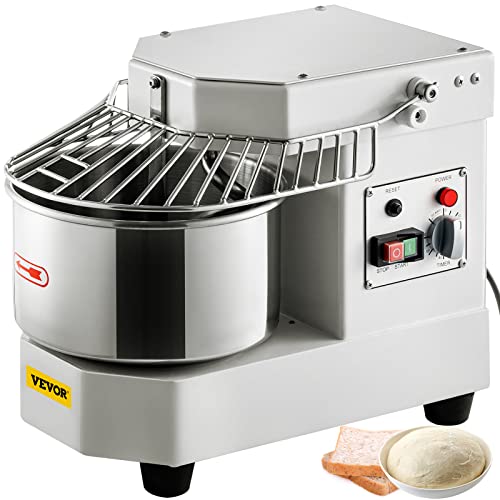
- Mixes up to 6.6 pounds of dough
- Dual-rotation system promotes even mixing
- 60-minute timer and safety shield included
Best For: Small bakeries needing moderate commercial capacity
Best Overall Capacity

- 9.5-quart capacity for larger batches
- Four modes plus seasonal fermentation
- 304 stainless steel bowl and blade
Best For: Small bakeries needing flexible, larger-batch dough preparation
Best Simple Fermentation Option
7.4Qt Kneading and Fermentation Mixer

- 7.4-quart bowl for moderate batches
- Kneads and ferments in one bowl
- Intermittent kneading with suction feet
Best For: Straightforward bread and pizza dough preparation
Quiet Compact Kneader

- Handles up to 1.4 kg of dough
- Timer and 100°F fermentation heating
- Low-speed, low-noise operation
Best For: Moderate batches and quieter everyday kneading
Smart Programmable Choice
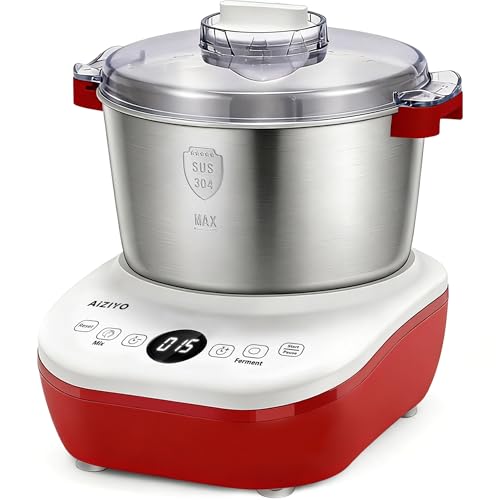
- Mix-pause-mix kneading program
- 77–100°F fermentation range
- Wide opening for adding ingredients
Best For: Large batches with programmable kneading and proofing
Heavy-Duty Capacity Pick – 30QT Commercial Dough Mixer
For small bakeries needing high-volume dough kneading machines, this 30-quart commercial mixer emphasizes capacity, power, and durable construction. Its 1,500-watt motor, stainless steel bowl, and forward/reverse operation suit demanding production work.
Best For: Small bakeries, restaurants, schools, and other operations preparing large batches of dough.
Pros:
- Large 30-quart bowl supports substantial batches of flour and water.
- 1,500-watt motor with double gears and belts is designed for efficient mixing.
- Forward and reverse rotation helps with both dough preparation and removal.
- Tilting bowl and detachable gear covers support easier cleaning and safer operation.
Cons:
- At 109.3 pounds, it is considerably less portable than smaller mixers.
- Its 85 dB noise level may be noticeable in compact workspaces.
- The large footprint requires dedicated counter or floor space.
This is the strongest capacity-oriented option in the group, but its size and weight make it most practical for bakeries with steady batch production and a permanent setup area.
Compact Commercial Choice – VEVOR 8.5Qt Dual-Rotation Mixer
Among dough kneading machines for small bakeries, this VEVOR model offers a more compact commercial format with dual rotation, a 60-minute timer, and an 8-liter stainless steel bowl. It can mix up to 6.6 pounds of dough per batch.
Best For: Small bakeries, pizzerias, restaurants, and food businesses needing moderate batch capacity with timed mixing.
Pros:
- Dual rotation combines a 21 rpm bowl with a 159 rpm hook for more even mixing.
- Food-contact components are made from food-grade stainless steel.
- Timer, waterproof-covered controls, and reset button simplify operation.
- Safety shield, automatic shutoff, and nonslip feet add practical safeguards.
Cons:
- The 7.3-quart bowl is smaller than the 30-quart commercial alternative.
- It has one speed, limiting adjustment for different mixing preferences.
- Its 81.6-pound weight still makes frequent relocation inconvenient.
This model balances commercial features and a smaller footprint, making it a sensible middle ground when a bakery needs more control and capacity than a household machine without moving to a very large mixer.
Fermentation-Focused Option – Joydeem 3.7Qt Dough Maker
This Joydeem dough maker is one of the more compact dough kneading machines for small bakeries, combining intermittent kneading with built-in seasonal fermentation modes. Its 3.7-quart bowl handles 200 to 1,100 grams of flour, with a recommended maximum of 900 grams for fermented dough.
Best For: Small-batch bakeries and kitchens making bread, pizza, pasta, sourdough, roti, dumplings, or steamed buns.
Pros:
- Summer and Winter fermentation modes maintain different temperature ranges for seasonal needs.
- Mixing and fermentation times are adjustable, with a combined mixing-and-fermentation mode.
- 304 stainless steel bowl and blade are durable and easy to clean.
- Compact design, suction cups, and a 50 dB noise rating support quieter operation.
Cons:
- The 3.7-quart capacity is better suited to small batches than high-volume production.
- The motor operates at 150 watts and the machine has no adjustable speeds.
- Replacement coverage noted in the specifications applies to home use only.
Choose this model when controlled proofing and a quiet, space-conscious design matter more than commercial-scale throughput. Its fermentation functions add value for bakeries producing smaller batches throughout the day.
Space-Saving Fermentation Pick – 7.4Qt Automatic Dough Maker
For small bakeries seeking dough kneading machines with integrated proofing, this 7.4-quart model combines a 250-watt motor with automatic fermentation. Its detachable stainless steel bowl accommodates 300 to 2,100 grams of flour in one batch.
Best For: Small bakeries and household-commercial kitchens preparing medium-sized batches of bread, pizza, noodles, dumplings, and sourdough.
Pros:
- 7.4-quart capacity supports larger batches than compact household dough makers.
- Automatic fermentation begins after kneading and maintains 77–100°F.
- Detachable stainless steel bowl is dishwasher safe for easier cleanup.
- Touch controls, digital display, feeding window, and noise-reduction pad improve convenience.
Cons:
- The 250-watt motor is less powerful than the 1,500-watt commercial mixer.
- Its listed capacity is still below the 30-quart option for high-volume production.
- The notes do not specify adjustable mixing speeds.
This machine is a practical compromise for operations that want more capacity than a compact dough maker while keeping automatic fermentation and a relatively small footprint. It is particularly useful when proofing consistency is part of the daily workflow.
Best Overall Capacity – 9.5Qt Dual-Mode Dough Maker
For small bakeries seeking dough kneading machines for small bakeries, the Joydeem HMJ-A901 stands out with its 9.5-quart bowl, adjustable timing, and dedicated fermentation options. Its 300W motor supports doughs for bread, pizza, pasta, roti, dumplings, and steamed buns, while the separate Blend mode handles fillings.
Best For: Small bakeries that need larger batch capacity and flexible year-round fermentation.
Pros:
- 9.5-quart bowl handles 900g to 2800g of flour, with a 2500g maximum for fermented dough.
- Offers Mix, Ferment, Mix + Ferment, and Blend modes.
- Adjustable mixing times from 5–30 minutes and fermentation times from 5–120 minutes.
- 304 stainless steel bowl and blade, plus suction feet for stability.
Cons:
- The 300W motor operates in intervals, so it is designed around controlled kneading rather than continuous heavy-duty mixing.
- Its larger footprint may require dedicated counter space.
The HMJ-A901 is a versatile choice when batch size and fermentation control matter most. Its dual functions also make it useful for bakeries preparing both dough and fillings.
Best for Preset Programs – 7.4Qt Microcomputer Dough Maker
Among dough kneading machines for small bakeries, the Joydeem JD-HMJ7L emphasizes straightforward automation. Its microcomputer controls preset timing and programs, while intermittent kneading simulates a manual kneading rhythm for bread, pizza, buns, and dumplings.
Best For: Small bakery workspaces that value preset operation, fermentation, and a space-saving vertical design.
Pros:
- Microcomputer controls time presetting and program selection.
- Can complete kneading in about 15 minutes or kneading and proofing in about 45 minutes, according to the supplied notes.
- Stainless steel bowl and blade are dishwasher safe; the base is not.
- Face-up controls, suction feet, and a weighted body support compact countertop use.
Cons:
- It has one speed and the speed is not adjustable.
- The listed noise level is 70 dB.
- Its stated 6.24-liter capacity is smaller than the 9.5-quart model in this roundup.
The JD-HMJ7L is a practical option for repeatable, relatively hands-off batches. Its preset-focused controls may appeal to operators who prefer simple operation over extensive manual adjustments.
Best Simple Fermentation Option – 7.4Qt Kneading and Fermentation Mixer
For small bakeries comparing dough kneading machines for small bakeries, this 7.4-quart electric dough maker combines mixing, intermittent kneading, and fermentation in one stainless steel bowl. The design is aimed at bread, pizza, sourdough, rolls, and dumplings while helping reduce transfers and countertop mess.
Best For: Bakeries seeking a straightforward kneading-and-proofing machine for family-size or moderate batches.
Pros:
- 7.4-quart capacity supports larger homemade and bakery-style batches.
- Combines kneading and fermentation in the same bowl.
- Intermittent kneading allows rest periods and may help limit heat buildup.
- 304 stainless steel bowl and suction feet support easier cleanup and stable operation.
Cons:
- The supplied notes identify a fermentation function but do not specify adjustable fermentation temperatures or times.
- At 250W, it has less listed power than the 300W Joydeem HMJ-A901.
- The product information does not list additional modes for mixing fillings.
This model keeps the workflow focused on core dough preparation and fermentation. It is worth considering when a bakery wants a moderate-capacity machine without the extra functions of more feature-heavy alternatives.
Large-Batch Fermentation Pick – 7.4-Quart Dough Mixer
For small bakeries seeking dough kneading machines for small bakeries, this 7.4-quart mixer combines a stainless steel bowl, automatic kneading, and constant-temperature fermentation. Its 250-watt motor, touch controls, and ingredient window support repeatable bread, pizza, and pastry preparation, while the intermittent kneading design is intended to help prevent overheating and premature rising.
Best For: Small bakeries and busy home-based operations preparing larger batches with built-in proofing.
Pros:
- 7.4-quart capacity suits multiple batches of bread, pizza, or pastries.
- Constant-temperature fermentation supports consistent proofing.
- Top window allows water, seasoning, or other ingredients to be added while mixing.
- Stainless steel construction, digital display, timer, and auto shutoff add practical convenience.
Cons:
- Only one speed is listed, limiting mixing flexibility.
- The 250-watt motor may be less suitable for especially heavy commercial workloads.
This model is a practical capacity-focused option when fermentation and easy ingredient adjustments matter more than multiple speed settings. Its large bowl and stainless steel build make it a reasonable fit for small-scale production.
Quiet Compact Kneader – 5.3-Quart Dough Mixer
This 5.3-quart machine is among the more compact dough kneading machines for small bakeries, with a dough-focused design rather than a general mixing setup. It uses a removable S-shaped 304 stainless steel blade, a low-speed motor, timer controls, and fermentation heating up to 100°F to streamline bread, pizza, pasta, and sourdough preparation.
Best For: Small baking operations that prioritize hands-free kneading, quieter operation, and batches up to 1.4 kg of dough.
Pros:
- Designed specifically for kneading dough and gluten development.
- Handles up to 1.4 kg of dough in a 5.3-quart stainless steel bowl.
- Timer and fermentation function can heat dough to 100°F.
- Low-speed, low-noise operation is suited to regular use.
Cons:
- Its 5.3-quart capacity is smaller than the 7.4-quart alternatives in this roundup.
- Knob controls provide less digital control than touchscreen models.
- The listed 150-watt motor may not be ideal for heavier production volumes.
Choose this kneader when batch size is moderate and straightforward, hands-free dough preparation is the priority. The removable blade and stainless steel bowl also support easier cleanup between recipes.
Smart Programmable Choice – DoughChief 7.4-Quart Mixer
The AIZIYO DoughChief is a useful option for small bakeries comparing dough kneading machines for small bakeries with integrated proofing. Its 7.4-quart 304 stainless steel bowl, touch panel, and 250-watt motor support bread, pizza, and pasta dough, while the mix-pause-mix program is designed to mimic a more hands-on kneading rhythm.
Best For: Small bakeries wanting a large-capacity mixer with programmable kneading and constant-temperature fermentation.
Pros:
- 7.4-quart 304 stainless steel bowl accommodates family-size or larger batches.
- Mix-pause-mix programming helps fold and stretch dough for smoother texture.
- Fermentation mode maintains a stated 77–100°F range.
- Wide top opening allows ingredients to be added during operation.
Cons:
- Only one speed is listed.
- The stated 75 dB noise level may be noticeable in quieter work areas.
- Fermentation requires yeast or fermentation powder.
The DoughChief stands out for combining a large bowl with a more structured kneading program and proofing control. It is especially appealing when consistent dough handling and fewer manual steps are more important than variable speeds.
How We Picked These Dough Kneading Machines for Small Bakeries
We evaluated the selected machines by focusing on the specifications that matter most in a small commercial baking environment: stated bowl capacity, motor power, dough capacity, timer controls, fermentation functions, construction, and versatility. We also considered whether each design appears better suited to occasional production, regular small-batch work, or higher-volume preparation.
Capacity claims can describe the bowl rather than the maximum recommended dough load, so buyers should confirm the manufacturer’s limits before ordering. Dense dough places more demand on a mixer than light batters or fillings.
Quick Comparison
| Type | Best suited for | Features to prioritize |
|---|---|---|
| Compact 3.7–5.3-quart models | Low-volume bakeries and limited counters | Reliable kneading, timer, easy cleaning |
| 7.4–9.5-quart models | Regular bread, pizza, and sourdough batches | Fermentation control, durable bowl, stable operation |
| 8.5–30-quart commercial models | Larger batches and frequent production | Motor capacity, duty rating, safety, serviceability |
Key Buying Factors for Dough Kneading Machines for Small Bakeries
Capacity and Batch Size
Choose a machine based on your typical dough load, not the largest occasional batch. Leave working room in the bowl so ingredients mix evenly and the motor is not strained. A smaller model may be more efficient for several modest batches, while a larger unit can reduce repetition during busy periods.
Motor Power and Dough Type
Pizza, bagel, and stiff sourdough require more torque than enriched or hydrated doughs. Compare motor specifications alongside the manufacturer’s recommended dough capacity. More wattage alone does not guarantee better kneading, but undersized machines can overheat or wear quickly under heavy use.
Controls, Timers, and Fermentation
Microcomputer controls and timers can improve repeatability by standardizing mixing and rest periods. Built-in fermentation functions may save space and simplify proofing, especially where the bakery lacks a dedicated warm cabinet. Confirm temperature ranges and cycle settings if fermentation is central to your workflow.
Construction and Cleanup
Stainless-steel bowls are practical for frequent cleaning and can resist odors and staining. Look for a stable base, accessible controls, removable tools where applicable, and components that are easy to sanitize. Also check the machine’s footprint, noise level, voltage, and clearance requirements.
Who Should Buy Which Dough Kneading Machines for Small Bakeries?
Choose a compact 3.7- or 5.3-quart machine if you run a home-based bakery, test recipes, or produce smaller daily orders. A 7.4- to 9.5-quart dough maker is a balanced choice for small bakeries making bread, pizza, noodles, or sourdough on a regular schedule, particularly when fermentation assistance is useful.
Pick an 8.5-quart or larger commercial mixer when you need faster batch turnover and a more production-oriented design. The 30-quart option is best reserved for bakeries with substantially larger batches, adequate electrical capacity, and enough floor or counter space. Before buying, verify warranty coverage, replacement parts, included accessories, and the seller’s support for your location.