OLED monitors deliver exceptional contrast and vibrant color, but their performance still depends on accurate calibration. The right colorimeter can help photographers, video editors, designers, and serious enthusiasts create a more reliable view of their work.
This roundup compares 10 calibration tools from Calibrite and Datacolor, including models designed for standard displays, high-brightness HDR workflows, and photo or video production.
Best 10 Monitor Calibrators for Oled Displays Picks for 2026
Best for Hybrid Creators
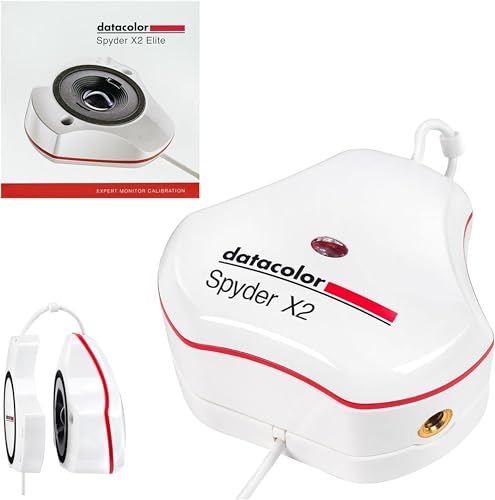
- Includes Rec. 709 and Rec. 2020 targets
- Provides advanced mapping and soft proofing
- Supports custom settings and multi-monitor matching
Best For: Photography, video, and digital design workflows
Best Simple Pro Option
Calibrite ColorChecker Display Pro

- Designed for repeatable display profiling
- Supports monitor and projector calibration
- Includes diffuser arm and tripod mount
Best For: Monitor and projector calibration with repeatable results
Versatile Pro Choice

- Supports OLED, QD-OLED, Mini LED, and XDR displays
- Calibration supports up to 12,000 nits
- Adds LUT export, analysis, and multi-monitor tools
Best For: Creative professionals with varied displays and advanced workflow needs
Budget Legacy Option

- Automated color and brightness calibration
- Calibrates multiple displays with one sensor
- Includes a quick ReCAL assistant
Best For: Simple multi-display calibration when newer HDR features are unnecessary
Best Beginner Pick
Spyder X Pro Monitor Calibrator

- Guided single-click calibration
- Supports multiple laptops and desktops
- Includes room-light monitoring and SpyderProof
Best For: First-time users and photographers
Best Pro Video Kit
Display Plus HL Video Photo Kit

- Measures up to 10,000 nits
- Supports OLED, mini-LED, and Apple XDR
- Includes a video ColorChecker reference
Best For: Professional photo and video creators
Best for Photo Workflows

- Supports OLED, mini-LED, and Apple XDR
- Includes RAW camera profiling tools
- Offers customizable white point and gamma targets
Best For: Photographers editing RAW files
Best High-Brightness Pick – Calibrite Display Pro HL
For shoppers comparing monitor calibrators for oled displays, the Calibrite Display Pro HL is designed for modern high-brightness screens. Its high-luminance sensor measures up to 3000 nits and works with LCD, mini-LED, OLED, Apple XDR displays, and compatible projectors.
Best For: Photographers, designers, and studios calibrating bright OLED, HDR, or multiple displays.
Pros:
- Supports OLED, mini-LED, LCD, Apple XDR, and compatible projectors.
- Measures up to 3000 nits for high-brightness workflows.
- PROFILER software includes advanced controls, validation, uniformity checks, and custom patch sets.
- Includes USB-C connectivity, USB-A adapter, storage pouch, and a 1/4-inch mount thread.
Cons:
- Its advanced features may be more than casual users need.
- Requires software on a Mac or Windows computer.
The Display Pro HL is the most specialized option here for bright modern panels. Choose it when HDR capability, display matching, and detailed validation tools matter more than keeping the setup simple.
Best for Hybrid Creators – Datacolor Spyder X2 Elite
The Datacolor Spyder X2 Elite is a strong choice among monitor calibrators for oled displays when your work spans photography, video, and digital design. It combines guided presets with deeper controls for users who need customized calibration and video targets.
Best For: Hybrid photo/video creators, digital designers, and users matching multiple monitors.
Pros:
- Includes Rec. 709 and Rec. 2020 video and cinema targets.
- Offers advanced display mapping, soft proofing, unlimited settings, and Studio Match.
- Supports both guided presets and customized calibration parameters.
- Uses native USB-C and includes a USB-A adapter.
Cons:
- The advanced feature set may have a learning curve.
- Its supplied notes identify compatibility with display monitors but do not specify a brightness measurement range.
X2 Elite makes sense for creators who need more than basic monitor profiling. Its video targets and Studio Match tools are particularly useful when consistent results across several displays are part of the workflow.
Best Simple Pro Option – Calibrite ColorChecker Display Pro
The Calibrite ColorChecker Display Pro offers a straightforward route to monitor calibration for OLED users who also need flexibility across display types. Its optical design is built for repeatable profiling, while the included diffuser arm supports ambient-light measurement and projector work.
Best For: Creators seeking repeatable monitor or projector profiling with a practical, compact colorimeter.
Pros:
- Optical design supports repeatable profiling across different display types.
- Rotatable diffuser arm works as a stand, optical cover, and ambient-light tool.
- Integrated tripod mount supports projector profiling in larger venues.
- Works with ccProfiler or i1Profiler software.
Cons:
- The supplied specifications identify LED display support but do not specifically list OLED compatibility.
- Software is not included as a separate component in the listed package details.
This is a sensible pick for users who value repeatability and projector support. However, shoppers specifically seeking a calibrator explicitly documented for OLED should compare its compatibility details with newer OLED-focused models.
Best for Easy Setup – Datacolor Spyder Monitor Calibrator
For buyers who want monitor calibrators for oled displays without a complicated process, this Datacolor Spyder emphasizes quick setup and guided software. It supports OLED, mini-LED, and Apple Liquid Retina XDR displays, with calibration taking about 90 seconds according to the supplied notes.
Best For: Beginners and everyday creators who want fast calibration with room-light guidance.
Pros:
- Supports OLED, mini-LED, and Apple Liquid Retina XDR displays.
- Offers an approximately 90-second calibration process.
- Preset calibration helps novices while customizable settings serve more advanced users.
- Ambient-light monitoring can recommend or automatically apply profiles based on room conditions.
Cons:
- The DevicePreview feature is identified as beta.
- The supplied notes do not list a specific brightness measurement range.
- Requires a nonstandard battery according to the listed specifications.
This Spyder is appealing when speed and ease of use take priority. Its OLED compatibility and ambient-light features provide useful everyday guidance, while custom settings leave some flexibility for more experienced users.
HDR Precision Pick – Calibrite Display Plus HL
For editors and colorists comparing monitor calibrators for oled displays, the Calibrite Display Plus HL is built for especially bright HDR-capable screens. Its high-luminance sensor measures up to 10,000 nits and works with OLED, Mini LED, Apple XDR, and compatible projectors.
Best For: HDR video professionals and multi-monitor editing setups that need advanced profiling and validation tools.
Pros:
- Measures displays up to 10,000 nits for high-brightness HDR workflows.
- Supports custom white point, luminance, contrast, gamma, and patch-set adjustments through PROFILER software.
- Includes validation, uniformity, and multi-monitor profiling tools.
- Works with Mac and Windows and includes USB-C plus a USB-A adapter.
Cons:
- Its advanced HDR capabilities may be more than needed for basic SDR calibration.
- Warranty coverage requires registration within 30 days and applies to authorized purchases.
The Display Plus HL is the strongest fit here for demanding HDR production, particularly when accurate highlights, clean blacks, and consistent matching across displays matter.
Versatile Pro Choice – SpyderPro Monitor Calibrator
The SpyderPro is a versatile option for buyers seeking monitor calibrators for oled displays alongside Mini LED, QD-OLED, and other backlight types. It supports brightness levels up to 12,000 nits and combines calibration with display analysis, projector calibration, and multi-monitor matching.
Best For: Photographers, designers, and video editors who want broad display support plus workflow and analysis features.
Pros:
- Supports OLED, QD-OLED, Mini LED, Wide LED, and Apple Liquid Retina XDR displays.
- Offers Standard Calibration in about 90 seconds and a deeper calibration mode.
- Can export 3D LUTs and supports Rec.709, Rec.2020, and DCI-P3 workflows.
- Includes StudioMatch, SpyderTune, uniformity checks, and room-light adaptation features.
Cons:
- The broad feature set may feel excessive for users who only need basic calibration.
- Some advanced functions depend on compatible video monitors or additional light-meter hardware.
Choose the SpyderPro when flexibility is the priority. Its combination of OLED compatibility, high-brightness support, analysis tools, and multi-display controls makes it a well-rounded professional solution.
Budget Legacy Option – Datacolor Spyder4Pro
The Datacolor Spyder4Pro is a straightforward colorimeter for users exploring monitor calibrators for oled displays without needing the extensive HDR-focused features of newer models. Its full-spectrum sensor can calibrate multiple displays and includes automated color and brightness calibration.
Best For: Basic display calibration and users who want a simple tool for maintaining consistency across multiple screens.
Pros:
- Automates color and brightness calibration.
- One sensor can calibrate multiple displays.
- Double-shielded color filters are designed for improved accuracy and long-term stability.
- ReCAL provides a quicker way to repeat calibration as displays change over time.
Cons:
- It is an older Spyder4 model rather than a current-generation OLED and HDR specialist.
- The supplied notes do not specify OLED, high-nit, or modern operating-system support.
- The listed product language is German.
The Spyder4Pro can make sense for uncomplicated calibration needs, but buyers with a current OLED or bright HDR display should verify compatibility before choosing this older model.
Best Beginner Pick – Spyder X Pro Monitor Calibrator
For shoppers comparing monitor calibrators for OLED displays, the Datacolor Spyder X Pro is a straightforward option built around quick, guided calibration. Its lens-based color engine, room-light monitoring, and support for multiple desktop and laptop displays make it practical for photographers and first-time users seeking more consistent color.
Best For: First-time users and photographers calibrating laptop or desktop displays.
Pros:
- Guided wizard workflow with single-click calibration.
- Supports multiple laptop and desktop monitors.
- Includes room-light monitoring, automatic profile changing, and before-and-after SpyderProof comparisons.
- Offers 12 predefined calibration targets.
Cons:
- The supplied notes do not identify OLED-specific or high-luminance calibration support.
- Its feature set is oriented toward ease of use rather than a complete camera-to-display workflow.
The Spyder X Pro is a sensible entry point when simplicity matters most. It is especially appealing for users who want fast calibration and multi-monitor support without needing to be color-management experts.
Best Pro Video Kit – Display Plus HL Video Photo Kit
Among monitor calibrators for OLED displays, the Calibrite Video Photo Kit stands out for high-luminance workflows. Its Display Plus HL colorimeter measures up to 10,000 nits and supports OLED, mini-LED, and Apple XDR panels, while the included ColorChecker Passport Video 2 extends the workflow from camera capture through editing.
Best For: Videographers and photographers managing bright displays, multiple cameras, and professional color workflows.
Pros:
- Measures displays up to 10,000 nits.
- Profiles OLED, mini-LED, and Apple XDR panels.
- Includes ColorChecker Passport Video 2 for white balance, exposure, and camera matching.
- Supports Windows and macOS through Calibrite PROFILER software.
Cons:
- Its bundled capture-reference tools may be unnecessary for users who only need monitor calibration.
- Software download is required.
- The Display Plus HL is not described as water resistant.
This is the most complete choice for creators who need both display calibration and on-set reference tools. The high-luminance capability makes it particularly relevant to modern OLED and other bright professional panels.
Best for Photo Workflows – Display Pro HL Photo Kit
The Calibrite Photo Kit is designed for photographers who want monitor calibration and camera profiling in one workflow. As one of the monitor calibrators for OLED displays, its Display Pro HL supports OLED, mini-LED, and Apple XDR panels, while the ColorChecker Passport Photo 2 helps establish consistent white balance and RAW camera profiles.
Best For: Photographers editing RAW files across modern high-luminance displays.
Pros:
- Supports calibration for OLED, mini-LED, and Apple XDR displays.
- Includes ColorChecker Passport Photo 2 for custom RAW camera profiles.
- Combines monitor calibration, white balance, and capture references.
- Offers customizable white point and gamma targets through Calibrite PROFILER.
Cons:
- The photo-focused Passport is less suited to video-specific workflows than a video color target.
- It may be more equipment than needed for users seeking only a display colorimeter.
- The supplied notes do not specify the maximum luminance measurement.
This kit is a strong match for still photographers who want consistency from camera capture to screen editing. It offers a broader photo color workflow than a standalone calibrator while retaining support for current OLED and high-luminance display types.
How We Picked the Best Monitor Calibrators for Oled Displays
We focused on calibration tools that support current OLED and high-contrast display workflows, while also considering compatibility with LCD and Mini LED monitors. We compared sensor capability, stated brightness range, software features, ease of use, and suitability for photography, video, design, and general color-critical work.
We also included both current high-brightness models and established options that may appeal to buyers calibrating SDR displays or shopping at a lower price. Camera color targets and bundled kits were considered separately because they can improve consistency from capture through editing.
Quick Comparison
| Best For | What to Look For |
|---|---|
| HDR OLED video | A high-brightness sensor and software with HDR support |
| Photography and design | Reliable profiling, broad display compatibility, and repeatable results |
| Camera-to-screen workflows | A colorimeter bundled with a camera color target |
| Basic monitor calibration | Simple software and support for your operating system |
| Existing or older displays | Verified compatibility and a suitable software license |
Key Buying Factors for Monitor Calibrators for Oled Displays
Brightness and HDR Capability
OLED displays may be used for SDR work or bright HDR mastering, and those are different calibration requirements. If you regularly work with HDR content, prioritize a model explicitly designed for high luminance. A standard colorimeter may be adequate for everyday SDR photography, office use, or web design but may not be the best choice for high-nit HDR workflows.
Software and Display Support
The sensor is only part of the system. Check whether the included software supports your operating system, monitor connection, OLED panel type, and desired color spaces. Look for controls for white point, luminance, gamma, and HDR where relevant. Manufacturer software can also differ in workflow simplicity and advanced adjustment options.
Color Targets and Production Needs
Photographers and designers may only need monitor profiling, while filmmakers and hybrid shooters can benefit from a kit that includes a camera color chart. A bundled target can help create more consistent color before footage or still images reach the editing display.
Ease of Use and Repeatability
Choose a straightforward device if you calibrate occasionally, or a more advanced model if you maintain several displays and need detailed control. Recalibrate after major changes to brightness, display settings, or room lighting, and keep the viewing environment reasonably consistent.
Who Should Buy Which Monitor Calibrators for Oled Displays?
HDR video professionals and OLED owners: Choose a high-brightness Calibrite Display Plus HL or a comparable HDR-capable tool when accurate bright highlights are central to the workflow.
Photographers and designers: A Display Pro HL, ColorChecker Display Pro, or Spyder X2 Elite is a practical fit for color-managed editing and print preparation.
Hybrid photo and video creators: Consider the Calibrite Video Photo Kit if you want both monitor profiling and a camera color target in one purchase.
Beginners and occasional users: A simpler Spyder or Calibrite package can provide dependable calibration without paying for features you will not use.
Before buying, confirm software compatibility, supported brightness levels, and whether the product is intended for your primary SDR, HDR, OLED, or multi-monitor setup.