Making fresh tomato sauce is easier when the press fits your workspace, storage limits, and batch size. The best tomato presses for small kitchens remove skins and seeds efficiently without demanding a full-size processing setup.
This roundup compares 10 manual and electric options, with practical considerations for capacity, cleanup, power, materials, and the kind of sauce-making routine each model suits.
Best 10 Tomato Presses for Small Kitchens Picks for 2026
Best Clamp-Mount Pick

- Clamps to countertops 3/4–2-1/8 inches thick
- Includes fine apple/tomato screen
- Optional motor and extra screens available
Best For: Small kitchens needing a versatile hand-crank strainer
Best Multiuse Strainer
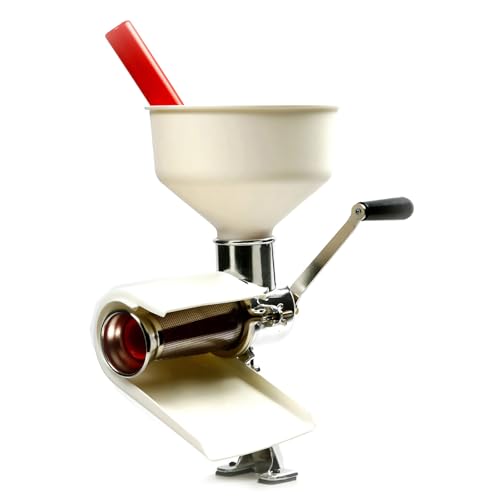
- 3-quart capacity for fruits and vegetables
- Includes fine mesh screen and standard spiral
- Optional screens support berry, pumpkin, and salsa recipes
Best For: Multiuse manual straining and pureeing
Best Electric Option
OMRA Spremy Electric Tomato Strainer

- Electric 1/4 HP motor processes tomatoes automatically
- Separates puree from seeds and skins
- Compact 7.87-inch footprint
Best For: High-volume tomato processing with suitable 220-volt power
Best Compact Manual Mill
Hungry Artisan 3-Disc Food Mill

- Three discs provide coarse, medium, and fine textures
- Works without an outlet
- Stainless steel construction for repeated use
Best For: Portable manual tomato sauce and applesauce preparation
Best Manual Press
Weston Stainless Steel Tomato Strainer
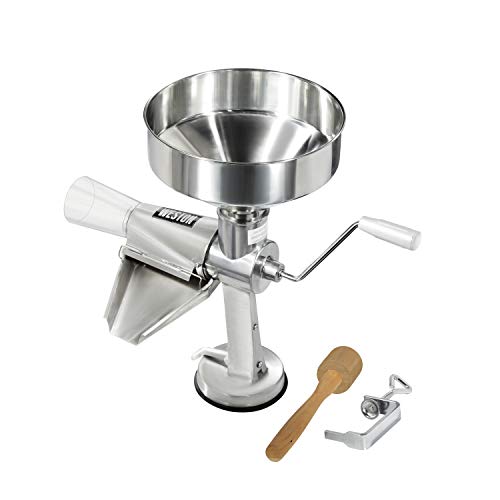
- One-gallon stainless steel hopper
- Dual suction-cup and C-clamp mounting
- Includes 1.5mm screen and stomper
Best For: Manual batch sauce making with flexible mounting
Best for Everyday Use

- 370W motor for reduced manual effort
- Large hopper for high-volume processing
- Tool-free disassembly for cleanup
Best For: Bulk sauce making and harvest-season canning
Best Compact Food Mill
Stainless Steel Rotary Tomato Strainer

- Three interchangeable texture discs
- Handles tomatoes, potatoes, fruit, and soups
- Dishwasher-safe stainless steel design
Best For: Everyday small-batch cooking with adjustable textures
Compact Manual Pick
Manual Tomato Juicer Sauce Maker

- Stainless steel filter separates skins and seeds
- Large feed inlet for fruit and vegetables
- Simple, machine-washable design
Best For: Small-kitchen cooks seeking a manual, energy-free option
Multitasker Pick

- Three discs for different food textures
- Dual hooks help stabilize it on a bowl
- Dishwasher-safe stainless steel construction
Best For: Cooks needing tomato sauce and other food-milling tasks
Batch Processing Pick
Weston Deluxe Electric Tomato Strainer

- 250-watt motor with forward and reverse speeds
- One-gallon hopper for larger batches
- Three screens for sauces, purees, and salsa
Best For: Home canners processing garden harvests or bulk produce
Best Clamp-Mount Pick – Johnny Apple Sauce Maker
For small kitchens, the Johnny Apple Sauce Maker is a practical tomato press that clamps to countertops instead of requiring a dedicated base. Its hand crank separates skins and seeds from tomatoes and other produce, while the included 1.3 mm screen is designed for fine sauces.
Best For: Small kitchens needing a clamp-mounted tomato and fruit strainer for sauces, purees, and juices.
Pros:
- Clamp fits countertops from 3/4 to 2-1/8 inches thick.
- Includes an apple/tomato screen, standard spiral, and instruction manual.
- Works with fruits and vegetables for sauces, jams, soups, and baby food.
- Optional electric motor is available separately.
Cons:
- Requires manual cranking unless the optional motor is purchased.
- Additional screens and the motor cost extra.
- Its 14.25-inch length may require storage planning.
This is a versatile choice when counter space is limited and secure clamping is more useful than a freestanding appliance. The included screen makes it ready for fine tomato sauce, while the accessory options add flexibility later.
Best Multiuse Strainer – Norpro 1951 Sauce Master
The Norpro 1951 Sauce Master is a hand-operated option for tomato presses for small kitchens, combining straining and pureeing in one tool. It forces produce through a chrome-plated steel screen while separating juice and pulp in a single operation.
Best For: Home cooks who want a multiuse strainer for tomatoes, fruits, vegetables, and purees.
Pros:
- Handles vegetables, fruits, and purees.
- Includes a fine mesh screen, standard spiral, recipe, and instructions.
- Has a listed 3-quart, 95-ounce capacity.
- Additional berry, pumpkin, and salsa screens are available separately.
Cons:
- Hand wash only.
- Extra screens require separate purchases.
- Its listed dimensions are relatively large for a small-kitchen tool.
The Sauce Master suits cooks who want one manual appliance for several straining tasks. Its included fine screen supports smooth preparations, but the 16-inch length and hand-wash requirement are worth considering before buying.
Best Electric Option – OMRA Spremy Electric Tomato Strainer
The OMRA Spremy Model 850 brings powered processing to tomato presses for small kitchens, using a 1/4 HP motor to separate puree from seeds and skins. Its compact 7.87-inch dimensions make it easier to place than many larger countertop strainers, though its electrical specifications need careful checking.
Best For: Cooks who want fast electric tomato processing in a compact footprint.
Pros:
- Automatically separates tomato puree from seeds and skins.
- Processes fresh or cooked tomatoes.
- Rated for production up to 330 pounds of tomatoes per hour.
- Uses a stainless steel hopper and die-cast metal housing.
Cons:
- Uses a 220-volt corded electrical supply.
- Designed primarily around tomato and apple processing.
- Electric operation may be more equipment than occasional users need.
This is the strongest fit for high-volume processing when manual cranking is impractical. Its compact body helps with placement, but the 220-volt requirement should be confirmed before purchase, particularly in a small home kitchen.
Best Compact Manual Mill – Hungry Artisan 3-Disc Food Mill
The Hungry Artisan 3-Disc Food Mill is a straightforward manual choice among tomato presses for small kitchens. Its stainless steel construction and three interchangeable discs let you choose coarse, medium, or fine textures without needing an outlet.
Best For: Small kitchens and canning setups that need adjustable textures and portable manual operation.
Pros:
- Includes coarse, medium, and fine stainless steel discs.
- Works without electricity.
- Stainless steel body, discs, and crank are designed for repeated use.
- Also handles applesauce, mashed potatoes, baby food, purees, and jam bases.
Cons:
- Manual cranking requires more hands-on effort.
- A food mill may not separate tomato material in the same way as a dedicated screw strainer.
- At 15.5 inches long, it still needs suitable storage space.
This mill is appealing when flexibility matters more than automation. The three discs provide useful control over texture, while the cordless design makes it easy to use anywhere during meal preparation or canning.
Best Manual Press – Weston Stainless Steel Tomato Strainer
For shoppers comparing tomato presses for small kitchens, the Weston Metal Tomato Strainer offers a manual setup with a stainless steel hopper and flexible mounting. Its one-gallon capacity suits sauce, puree, jam, and salsa projects when you want batch capability without an electric motor.
Best For: Home cooks who want a manually operated tomato press with a generous hopper and secure countertop or table mounting.
Pros:
- Dual suction-cup and C-clamp mounting system fits a variety of flat surfaces.
- Separates skins and seeds without requiring peeling or coring first.
- Includes a splash guard, stomper, stainless steel chute, and 1.5mm screen.
- One-gallon hopper supports larger batches than many compact manual mills.
Cons:
- Manual operation requires ongoing handle turning.
- Only the 1.5mm multipurpose screen is included; additional screens are sold separately.
This is a practical choice when small-kitchen storage matters but you still want a relatively large hopper. The mounting system adds setup flexibility, while the included screen keeps the package focused on common tomato and soft-fruit processing tasks.
Best for Everyday Use – VEVOR 370W Tomato Strainer
Among tomato presses for small kitchens, the VEVOR Electric Tomato Strainer is the speed-focused option. Its 370W motor, large hopper, and stainless steel filter are designed to process substantial quantities of tomatoes into sauce, puree, or juice with less manual effort.
Best For: Cooks processing large harvests or preparing bulk batches who have room for a 21.7-pound countertop appliance.
Pros:
- 370W motor reduces the effort required for high-volume sauce making.
- Stainless steel filter separates peels and seeds in a single pass.
- Large hopper helps reduce frequent refilling.
- Core components disassemble without tools and rinse clean quickly.
Cons:
- At 19.29 by 9.06 by 13.58 inches and 21.7 pounds, it needs substantial storage space.
- Tomatoes should be cut into small pieces to help reduce clogging.
- Its capacity and motor may be more than needed for occasional small batches.
This model prioritizes throughput over compactness. It can be a strong fit for seasonal canning, but small-kitchen shoppers should measure their available counter and storage space before choosing this larger electric design.
Best Compact Food Mill – Stainless Steel Rotary Tomato Strainer
For small kitchens seeking a flexible alternative to a dedicated tomato press, this stainless steel rotary food mill offers three interchangeable discs in a moderate everyday format. It handles tomato sauce alongside applesauce, mashed potatoes, soups, and other soft foods.
Best For: Home cooks who want one compact manual tool for adjustable textures and several soft-food preparation tasks.
Pros:
- Coarse, medium, and fine discs let you adjust texture.
- Manual rotary handle is designed for more comfortable processing.
- Stainless steel construction is dishwasher safe, stain resistant, and corrosion resistant.
- Disassembles for cleaning and includes a handle hole for hanging storage.
Cons:
- Manual cranking is less convenient for large batches than an electric press.
- Its listed dimensions are 14.37 by 16.14 by 3.62 inches, so storage space is still needed.
This food mill is the most versatile pick for everyday cooking rather than dedicated bulk tomato processing. Its interchangeable discs make it useful when you want control over sauce texture and a tool that can also handle potatoes, fruit, jams, and soups.
Compact Manual Pick – Manual Tomato Juicer Sauce Maker
For shoppers comparing tomato presses for small kitchens, this manual tomato juicer offers a straightforward way to separate tomato skins and seeds from the pulp without relying on a motor. Its stainless steel filter, large feed inlet, and simple construction make it practical for everyday sauce and juice preparation.
Best For: Small-kitchen cooks who want a manual tomato press with a high-yield filter and easy cleanup.
Pros:
- Stainless steel filter separates peels and seeds from pulp.
- Large feed inlet accommodates more fruit or vegetables at once.
- Simple structure is designed for convenient cleaning and energy-free operation.
- Wear-resistant PP shell is described as durable.
Cons:
- Manual operation requires more hands-on effort than an electric press.
- The supplied dimensions may take up noticeable counter space in a very compact kitchen.
This is a sensible choice when simplicity and lower-power operation matter most. The adjustable feature and machine-washable care instructions add flexibility, while the manual design keeps the process uncomplicated.
Multitasker Pick – Stainless Steel Food Mill
If you need tomato presses for small kitchens that can handle more than sauce, this stainless steel food mill is a versatile option. Three milling discs support different textures, while the dual-hook design helps secure the mill to a bowl during use.
Best For: Cooks who want one compact hand-operated tool for tomato sauce, mashed potatoes, jams, fruits, and vegetables.
Pros:
- Includes three milling discs with different pore sizes.
- Food-grade stainless steel construction is sturdy and dishwasher-safe.
- Dual hooks and a soft silicone-covered crank support steady operation.
- Includes a multifunctional spoon, wide-mouth funnel, and measuring spoon.
Cons:
- Manual cranking requires effort, especially when processing larger quantities.
- Its multifunctional design may be more than needed for shoppers focused only on tomatoes.
The three screens make this a flexible alternative to a dedicated tomato strainer, particularly for cooks who value varied textures and broader kitchen use. Its hanging hole also supports space-conscious storage.
Batch Processing Pick – Weston Deluxe Electric Tomato Strainer
Among tomato presses for small kitchens, the Weston Deluxe is the powered choice for cooks who process larger quantities or preserve seasonal produce. Its 250-watt motor, two speeds, and one-gallon hopper are designed to move through tomatoes and other soft produce efficiently.
Best For: Home canners and sauce makers processing garden harvests or bulk produce.
Pros:
- 250-watt motor provides forward and reverse speeds.
- One-gallon hopper supports larger batches.
- Three stainless steel screens handle tomatoes, larger vegetables, and chunky salsa textures.
- Removes skins and separates seeds without coring.
Cons:
- Its 14-by-12-by-17-inch footprint may be substantial for a small counter.
- Requires access to a 120-volt outlet.
- Powered equipment may be excessive for occasional small batches.
This model is best viewed as a capacity-focused solution rather than the smallest countertop tool. The reverse function can help prevent jams, and the included stomper supports controlled feeding into the hopper.
How We Picked the Best Tomato Presses for Small Kitchens
We focused on features that matter in compact kitchens: countertop footprint, storage convenience, ease of feeding and cranking, straining performance, cleanup, and suitability for occasional or larger batches. The selection includes clamp-style presses, rotary food mills, and electric models so you can match the tool to your available space and preferred workflow.
We also considered hopper size, construction materials, included discs or screens, expected output, and whether a model is better suited to fresh meals, preserving, or seasonal canning. Product specifications and intended use should be confirmed before purchase, especially for electric units and accessories.
Quick Comparison
| Type | Best For | Main Advantage | Potential Trade-Off |
|---|---|---|---|
| Manual clamp press | Small batches and limited storage | Compact and power-free | Requires hand cranking |
| Manual food mill | Sauces, purées, and small servings | Versatile and easy to store | May leave more pulp or require extra passes |
| Electric strainer | Frequent sauce making | Faster processing with less effort | Needs counter space, power, and cleanup |
| Large-hopper model | Preserving and canning batches | Fewer refills | Bulkier for small kitchens |
Key Buying Factors for Tomato Presses for Small Kitchens
Size and Storage
Measure both the working area and the storage location. A clamp model or compact food mill is usually easiest to put away, while electric presses need room for the motor, hopper, accessories, and cord.
Manual or Electric Operation
Manual presses are quiet, inexpensive to operate, and practical for a few tomatoes or a small saucepan of sauce. Electric models reduce hand effort and make more sense when processing garden harvests or repeated canning batches.
Straining Control
Look for the screen or disc configuration that matches your preferred texture. Fine screens generally produce smoother sauce, while interchangeable discs can add flexibility for applesauce, purées, or thicker preparations.
Cleanup and Materials
Removable parts simplify rinsing and reduce food buildup. Stainless steel components offer durability and stain resistance, while plastic parts can reduce weight and cost. Confirm which pieces are dishwasher-safe rather than assuming every component is.
Stability and Capacity
A secure clamp, broad base, or stable feet help prevent spills. Smaller hoppers save space but require more frequent refilling; larger hoppers improve batch efficiency at the cost of storage and countertop room.
Who Should Buy Which Tomato Presses for Small Kitchens?
Choose a manual clamp press if you want a straightforward, compact tool for occasional tomato sauce and have a suitable counter or table edge.
Choose a rotary food mill if versatility matters and you also want to process potatoes, applesauce, jams, or vegetable purées. These are often the easiest fit for cooks with minimal storage.
Choose a compact electric strainer if you make sauce regularly, dislike repetitive cranking, or process enough tomatoes that speed matters. Allow space for the motor and plan for more involved cleanup.
Choose a larger-hopper electric model if your priority is preserving or canning substantial quantities. For most apartment cooks and occasional users, however, a smaller manual or electric option will be easier to store and more proportionate to everyday needs.