A USB hub with Ethernet is a practical upgrade for laptops and desktops that lack built-in wired networking or enough ports. The right model can add Gigabit Ethernet alongside USB expansion, HDMI, charging, and other useful connections.
Our selection covers compact adapters, everyday USB-A hubs, and full USB-C docking-style options. Use the buying guide below to match port selection, speed, compatibility, and power needs to your setup.
Best 10 USB Hub with Ethernet Picks for 2026
Best for USB-A Expansion
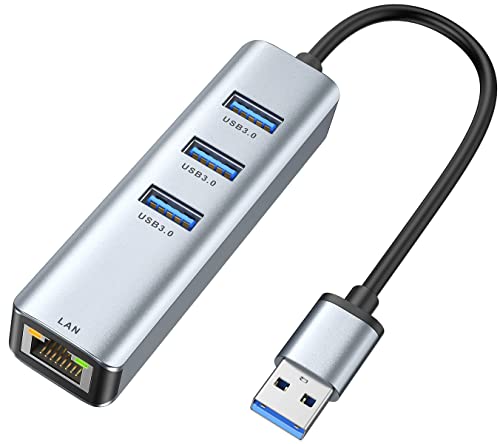
- Three USB 3.0 ports plus Gigabit Ethernet
- Up to 5Gbps USB data transfer
- Compact aluminum design with 24-month warranty
Best For: USB-A laptops and desktops needing wired networking and extra peripherals
Best Full-Featured USB-C Dock
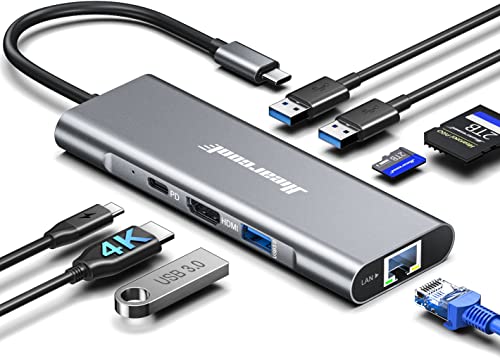
- 1Gbps Ethernet and 4K@60Hz HDMI
- 100W pass-through charging
- USB-A, SD, and TF expansion
Best For: USB-C laptops needing networking, display, charging, and card readers
Best for USB-A Networking
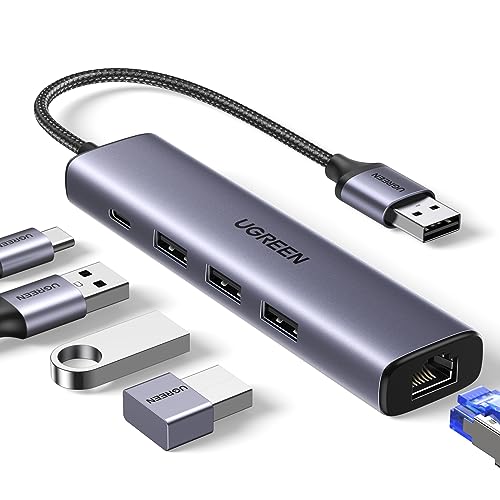
- Gigabit Ethernet with three USB 3.0 ports
- USB-C input powers high-demand peripherals
- Up to 5Gbps data transfer
Best For: USB-A users connecting wired internet and external accessories
Best Compact USB-C Option

- Ethernet, HDMI, USB-C, and two USB-A ports
- 4K@30Hz display support
- 65W pass-through charging
Best For: USB-C laptops and tablets needing essential networking and display connectivity
Best All-Around Pick
UGREEN Revodok 6-in-1 USB-C Hub

- Gigabit Ethernet up to 1000Mbps
- 4K HDMI output at 30Hz
- Three USB-A 3.0 ports and up to 85W pass-through charging
Best For: Everyday laptop connectivity with wired networking and USB-A accessories
Best Compact USB-A Option
TP-Link UE330 USB 3.0 Ethernet Hub

- Gigabit USB-A to RJ45 Ethernet
- Three additional USB 3.0 ports
- Compact 1.76-ounce design with broad OS support
Best For: Traveling users with USB-A laptops and desktops
Best Feature-Rich Pick

- Gigabit Ethernet and 4K HDMI at 60Hz
- SD and TF card readers included
- Up to 10Gbps data transfer and 85W pass-through charging
Best For: USB-C laptop workstations and card-based media workflows
Best Basic USB Hub with Ethernet
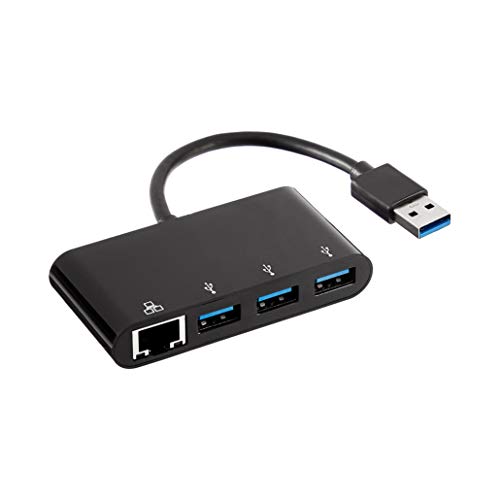
- Three USB-A 3.0 ports
- Gigabit Ethernet support
- Slim plug-and-play design
Best For: Laptop users needing basic USB-A expansion and wired networking
Best Premium USB-C Hub with Ethernet

- 4K HDMI output support
- Ethernet, card readers, and USB ports
- Up to 85W pass-through charging
Best For: USB-C laptop workstations needing networking and broad connectivity
Best High-Port USB Hub with Ethernet
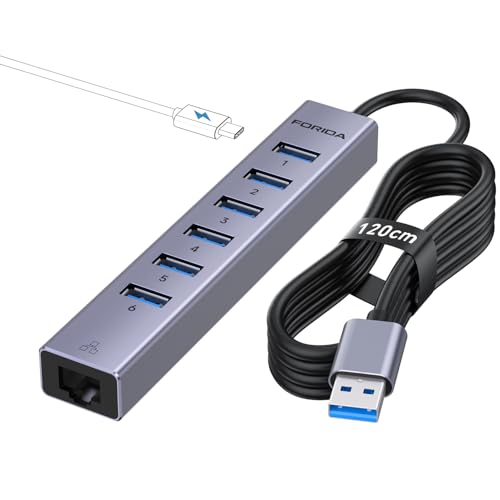
- Six USB 3.0 ports
- Gigabit Ethernet and auxiliary power
- 3.9-foot cable for flexible placement
Best For: Multi-peripheral setups needing many USB-A ports
Best for USB-A Expansion – Compact Gigabit Ethernet Hub
If you need a USB hub with ethernet for a laptop or desktop that still uses USB-A, the ABLEWE 4-in-1 adapter combines wired networking with three USB 3.0 ports. Its Gigabit Ethernet connection supports 10/100/1000Mbps speeds, while the USB ports can handle peripherals and storage devices at up to 5Gbps.
Best For: USB-A laptops and desktops that need wired internet plus extra ports for keyboards, mice, flash drives, or hard drives.
Pros:
- Gigabit Ethernet supports up to 1000Mbps.
- Three USB 3.0 ports can operate simultaneously with the network connection.
- Plug-and-play support for many Windows, macOS, Linux, and Chrome OS systems.
- Compact aluminum design backed by a 24-month warranty.
Cons:
- It uses a USB 3.0 connection rather than USB-C.
- Compatibility and driver support vary by operating system.
This is a practical choice when wired networking and standard USB expansion matter more than video output, card readers, or laptop charging. Its three-port layout makes it particularly useful for a simple desk setup.
Best Full-Featured USB-C Dock – 8-in-1 Ethernet Hub
The Hiearcool USB-C hub is a USB hub with ethernet built for broader connectivity. Along with 1Gbps Ethernet, it offers 4K@60Hz HDMI, three USB-A 3.0 ports, SD and TF card readers, and USB-C pass-through charging up to 100W.
Best For: USB-C laptop users who need wired internet, an external display, accessory ports, memory-card access, and pass-through charging in one device.
Pros:
- Combines 1Gbps Ethernet with 4K@60Hz HDMI output.
- Three USB-A ports support peripherals and storage devices at up to 5Gbps.
- Supports up to 100W USB-C pass-through charging.
- Built-in SD and TF readers are useful for photo and video transfers.
Cons:
- Its many features may be unnecessary if you only need Ethernet and USB ports.
- It requires a USB-C host connection.
For a home office, travel kit, or creator workstation, this hub offers a strong balance of networking, display, charging, and media connectivity. It is the most versatile option in this group, provided your computer supports the required USB-C functions.
Best for USB-A Networking – UGREEN 5-in-1 Ethernet Hub
UGREEN’s 5-in-1 adapter is a straightforward USB hub with ethernet for adding stable wired networking and more USB-A connectivity. It includes Gigabit Ethernet, three USB 3.0 ports with up to 5Gbps data transfer, and a USB-C power input for high-power peripherals.
Best For: Users who want a compact USB-A adapter for wired internet and multiple accessories, especially when an external drive needs additional power.
Pros:
- Gigabit Ethernet supports network speeds up to 1000Mbps.
- Three USB 3.0 ports provide up to 5Gbps synchronization.
- USB-C power input can help power high-power peripherals such as hard drives.
- Plug-and-play support is available on Windows 11/10/8.1, macOS, and Chrome OS.
Cons:
- The USB-C power input cannot charge the host laptop.
- Driver installation is required for some older Windows versions and Linux.
- It does not include HDMI or other display outputs.
This model focuses on the essentials: fast wired networking and USB-A expansion. The separate power input is a useful advantage for demanding peripherals, but shoppers looking for monitor connectivity or laptop charging should consider a more feature-rich USB-C dock.
Best Compact USB-C Option – Anker 6-in-1 Ethernet Hub
The Anker PowerExpand 6-in-1 is a USB hub with ethernet that adds essential connectivity to compatible laptops and tablets. It includes Ethernet, HDMI, USB-C data, two USB-A data ports, and a Power Delivery input supporting up to 65W pass-through charging.
Best For: MacBook, iPad Pro, XPS, and other compatible USB-C devices that need wired networking, a display connection, and everyday accessory expansion.
Pros:
- Includes Ethernet, HDMI, USB-C data, and two USB-A data ports.
- HDMI supports external displays up to 4K@30Hz.
- 65W pass-through charging supports laptop power while the hub is connected.
- Aluminum enclosure and an 18-month warranty add practical durability and support.
Cons:
- HDMI output is limited to 4K@30Hz rather than 60Hz.
- It has fewer USB-A ports than some larger hubs.
- Pass-through charging requires a separate 65W wall charger.
This is a sensible middle ground for users who want a compact USB-C hub with networking and display support without the extra card readers found on larger docks. Choose it when 4K@30Hz is sufficient and a 65W charging setup fits your workflow.
Best All-Around Pick – UGREEN Revodok 6-in-1 USB-C Hub
If you need a USB hub with Ethernet for everyday laptop use, the UGREEN Revodok 6-in-1 combines a Gigabit RJ45 connection with HDMI, charging, and three USB-A ports. It is a practical choice for adding wired networking and common peripherals through one USB-C port.
Best For: Laptop users who want wired Gigabit Ethernet, an external display, USB-A accessories, and pass-through charging in a compact hub.
Pros:
- Gigabit Ethernet supports speeds up to 1000Mbps for a more stable wired connection.
- 4K HDMI output supports up to 30Hz for monitors, meetings, movies, and presentations.
- Three USB-A 3.0 ports support data transfer speeds up to 5Gbps.
- Supports up to 85W USB-C pass-through charging from its 100W PD input.
Cons:
- HDMI output is limited to 4K at 30Hz and does not support HDR or 3D.
- The USB-C port is for charging only; it does not support data or video output.
This UGREEN hub offers a well-balanced mix of networking, display, charging, and peripheral support. It is especially appealing when three USB-A ports are more useful than card readers or higher-refresh-rate video.
Best Compact USB-A Option – TP-Link UE330 USB 3.0 Ethernet Hub
The TP-Link UE330 is a straightforward USB hub with Ethernet for computers that use USB-A. It adds a Gigabit RJ45 port and three USB 3.0 ports, making it useful when you need wired networking without HDMI, card readers, or charging features.
Best For: Windows, Mac, Linux, and Chrome OS users who want a compact USB-A Gigabit Ethernet adapter with extra USB ports.
Pros:
- Gigabit Ethernet provides a stable wired network connection through USB 3.0.
- Adds three USB 3.0 ports with transfer rates up to 10 times faster than USB 2.0.
- Backward compatible with USB 2.0 and USB 1.1 devices.
- Compact, lightweight design weighs 1.76 ounces and is suited to travel.
Cons:
- Uses USB-A rather than USB-C, so an adapter may be needed for USB-C-only devices.
- It does not include HDMI, card readers, or pass-through charging.
The UE330 keeps its feature set focused and portable. If your main priorities are Gigabit Ethernet and additional USB-A connectivity, its simple plug-and-play design and broad operating-system support make it a sensible option.
Best Feature-Rich Pick – UGREEN Revodok Pro 9-in-1 Hub
For a more capable USB hub with Ethernet, the UGREEN Revodok Pro 9-in-1 adds Gigabit networking alongside 4K HDMI at 60Hz, SD and TF card readers, USB data ports, and pass-through charging. It is designed for users who need several kinds of connectivity from one USB-C port.
Best For: MacBook and compatible USB-C laptop users who need Ethernet, faster HDMI refresh, memory-card access, and multiple peripheral connections.
Pros:
- Gigabit Ethernet supports up to 1000Mbps for stable wired connectivity.
- 4K HDMI supports 60Hz for smoother external-display output than a 30Hz hub.
- Includes SD and TF card readers plus USB-A and USB-C data ports.
- Supports data transfer speeds up to 10Gbps and up to 85W pass-through charging.
Cons:
- The USB-C port supports charging only, not data transmission or video output.
- Its feature set may be unnecessary if you only need Ethernet and a few USB ports.
- Listed minimum operating-system support is macOS 14 Sonoma.
This is the strongest choice of the three for expanded workstation or creative workflows. Its 4K/60Hz HDMI and built-in card readers add flexibility, while Gigabit Ethernet handles wired networking for compatible USB-C systems.
Best Basic USB Hub with Ethernet – Compact 4-Port Adapter
If you need a straightforward usb hub with ethernet for a laptop, this Amazon Basics adapter combines three USB-A 3.0 ports with a Gigabit Ethernet connection. It supports USB 3.0 transfer speeds up to 5Gbps and plug-and-play setup for supported Windows and Mac systems.
Best For: Laptop users who want wired Gigabit networking plus a few extra USB-A ports in a lightweight, travel-friendly design.
Pros:
- Includes three USB-A 3.0 ports with up to 5Gbps data transfer.
- Supports 10/100/1000 Mbps Gigabit Ethernet connections.
- Compact plastic design and plug-and-play setup.
Cons:
- Offers only three USB-A ports and no USB-C, HDMI, or card-reader connections.
- Actual network speeds depend on the cable, router, and connected hardware.
This is a sensible pick when you want essential USB expansion and stable wired networking without paying for display or storage-reader features you may not need.
Best Premium USB-C Hub with Ethernet – Anker 8-in-1 Dock
This Anker 8-in-1 usb hub with ethernet is designed for USB-C laptops that need more than basic port expansion. Along with Ethernet, it provides HDMI, USB-C and USB-A data ports, SD and microSD readers, and up to 85W pass-through charging.
Best For: USB-C laptop users who want one compact hub for wired networking, 4K display output, memory cards, peripherals, and charging.
Pros:
- Combines Ethernet, HDMI, SD/microSD readers, and three data USB ports.
- Supports HDMI output up to 4K at 60Hz with a DP 1.4 laptop.
- Provides up to 85W pass-through charging and up to 10Gbps data transfer.
Cons:
- Requires a compatible USB-C connection with DP Alt Mode for display output.
- Needs a 100W Power Delivery charger and cable to provide adequate power.
- Not compatible with Linux according to the supplied specifications.
With its broad feature set, this is the most versatile option of the three, especially for a modern workstation setup. Check your laptop’s video and Power Delivery compatibility before buying.
Best High-Port USB Hub with Ethernet – Long-Cable 8-Port Adapter
For users who need lots of peripheral connections, this aluminum usb hub with ethernet expands one USB-A port into six USB 3.0 ports, a USB-C 5V/3A power interface, and Gigabit Ethernet. Its 3.9-foot cable also provides more flexibility for positioning the hub.
Best For: Desktop and laptop setups with several USB peripherals, especially when a long connection cable and an auxiliary power input are useful.
Pros:
- Provides six USB 3.0 ports plus Gigabit Ethernet.
- Includes a USB-C 5V/3A power interface for up to 15W charging power.
- Uses a 3.9-foot cable and supports Windows, macOS, Linux, Chrome OS, and Unix.
Cons:
- Connects through USB-A rather than USB-C.
- USB data transfer is rated up to 5Gbps, below the Anker hub’s 10Gbps rating.
- The auxiliary power interface is described as a 5V charging port, not laptop Power Delivery input.
This FORIDA hub is a practical choice when port count matters more than video output or advanced docking features. Its long cable and optional power input make it particularly convenient for crowded desks.
How We Picked the Best USB Hub with Ethernet
We focused on models that combine dependable wired networking with genuinely useful port expansion. The lineup includes USB-A and USB-C designs, compact travel adapters, and larger multiport hubs for desks or home offices. We compared the advertised Ethernet speed, USB standards, video support, power options, operating-system compatibility, cable design, and overall flexibility.
Because specifications vary considerably, check the product listing before buying—especially if you need a particular HDMI resolution, USB transfer rate, or compatibility with a tablet, Chromebook, Mac, or Windows laptop.
Quick Comparison
| Best For | What to Prioritize | Recommended Style |
|---|---|---|
| Travel | Compact size and plug-and-play setup | Small USB-C or USB-A adapter |
| Home office | Gigabit Ethernet, multiple USB ports, and charging | Multiport USB-C hub |
| External display users | HDMI resolution and refresh-rate support | USB-C hub with HDMI |
| Legacy laptops | USB-A compatibility and driver support | USB 3.0 hub with RJ45 |
| Peripheral-heavy setups | Port count and external power | Powered seven- or nine-port hub |
Key Buying Factors for a USB Hub with Ethernet
Connector and Compatibility
First, identify whether your computer has USB-A, USB-C, or both. USB-C does not automatically mean every hub supports charging, video, or high-speed data. Confirm operating-system support and whether your device permits USB accessories without additional drivers.
Ethernet and USB Speeds
Gigabit Ethernet is generally the best choice for fast broadband, network storage, and large file transfers. A USB 3.0 connection is preferable to USB 2.0 for high-speed peripherals, although the hub’s shared bandwidth can limit simultaneous transfers.
Video and Power Features
If you need a monitor, verify HDMI resolution and refresh-rate claims for your exact host device. For charging, look for USB Power Delivery support and remember that the hub may pass through less power than the charger provides. Bus-powered hubs are convenient, while powered models are better for hard drives and several demanding peripherals.
Build and Layout
Consider cable length, port placement, heat management, and whether the hub will sit on a desk or travel in a bag. A longer attached cable can help with awkward ports, while a compact aluminum body may better suit frequent travel.
Who Should Buy Which USB Hub with Ethernet?
Choose a compact USB-A model if your computer has traditional USB ports and you mainly need wired internet plus a few peripherals. Select a USB-C hub with Ethernet when you want one connection for networking, displays, accessories, and potentially charging. A six-in-one model is a sensible middle ground for most laptop users, while an eight- or nine-in-one hub suits monitor setups, card readers, storage, and multiple accessories.
For a desktop replacement or permanent workstation, prioritize a powered design or a model with power delivery. If reliability matters more than extra features, focus on Gigabit Ethernet, stable USB 3.0 performance, and confirmed compatibility rather than choosing the hub with the longest feature list.