Adding desktop-class graphics to a laptop or compact PC can be an effective way to improve gaming, creative workloads, and GPU-accelerated applications without replacing the entire system. The right enclosure or dock must match your computer’s connection, graphics card dimensions, power needs, and operating system.
This roundup includes full eGPU enclosures alongside PCIe docks and GPU support hardware, so check each product’s role carefully before buying. The guide below explains compatibility, performance, installation, and the features that matter most.
Best 10 External GPU Enclosures for Full Size Graphics Cards Picks for 2026
Best Premium Enclosure
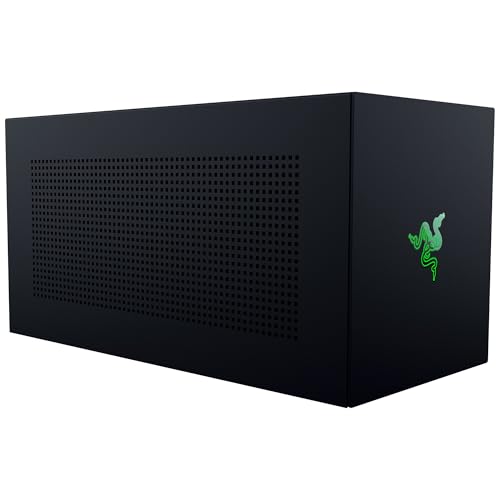
- Supports GPUs up to four slots wide
- Thunderbolt 5 bandwidth up to 80 Gbps
- 140W USB-C power delivery and active cooling
Best For: Compatible Windows and USB 4 users seeking a full-size GPU enclosure
Best Vertical Mount
EZDIY-FAB PCIe 4.0 GPU Bracket

- Supports most one- to three-slot GPUs
- Includes a PCIe 4.0 x16 riser cable
- Adds vertical mounting and 5V ARGB lighting
Best For: Compatible ATX and mid-tower desktop builds
Best M.2-Based Dock

- PCIe 5.0 x4 bandwidth up to 128 Gbps
- Supports full-size cards without length restrictions
- Requires an NVMe M.2 slot and 500W+ ATX PSU
Best For: DIY eGPU setups using Mini PCs, NUCs, or compatible laptops
Best Anti-Sag Support

- Adjustable length and height support
- Sturdy iron structure helps reduce GPU sag
- Built-in 5V three-pin ARGB lighting
Best For: Desktop GPU builds needing added card support
Desktop-Class Expansion
Razer Core X Aluminum eGPU Enclosure
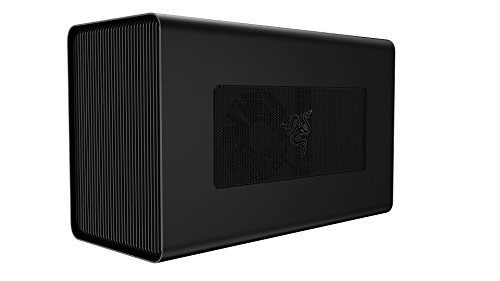
- Fits full-size PCIe cards up to three slots wide
- 650W PSU with up to 100W laptop charging
- Windows NVIDIA/AMD; macOS compatible AMD only
Best For: Thunderbolt 3 laptop users needing desktop GPU expansion
Flexible GPU Stability
GSCOLER Dual-Mode GPU Support Bracket
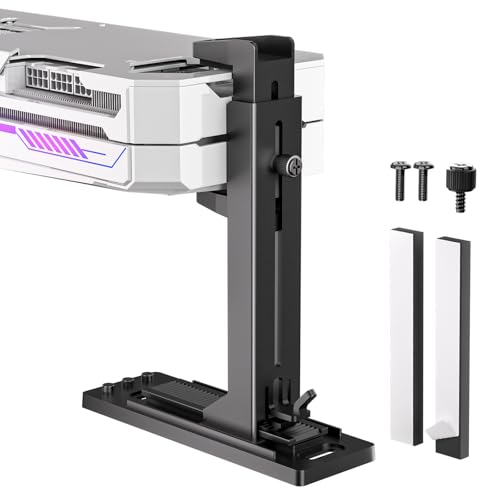
- 35–120mm adjustable support range
- Vertical or horizontal installation
- Screw or 3M pad mounting options
Best For: Reducing GPU sag in flexible chassis layouts
Compact Anti-Sag Support
Jeymei Small Aluminum GPU Support Bracket

- Aluminum construction with magnetic base
- Tool-free 1.46–1.97-inch height adjustment
- Designed for ATX, Micro-ATX, and ITX chassis
Best For: Compact builds needing simple GPU anti-sag support
Fan-Mounted Stability Pick
Adjustable Aluminum GPU Support Bracket

- Fan-mounted design aims to avoid blocking airflow
- Tool-free height adjustment up to 80 mm
- Aluminum construction with included screw options
Best For: Compatible GPU setups needing adjustable fan-mounted support
Compact Case Support Pick
upHere G205 Aluminum GPU Brace

- Segmented slide design suits MATX and ITX cases
- Concealed magnetic base supports firm placement
- Designed for single or dual-slot cards and fans
Best For: Compact compatible cases needing flexible GPU bracing
ARGB Monitoring Pick
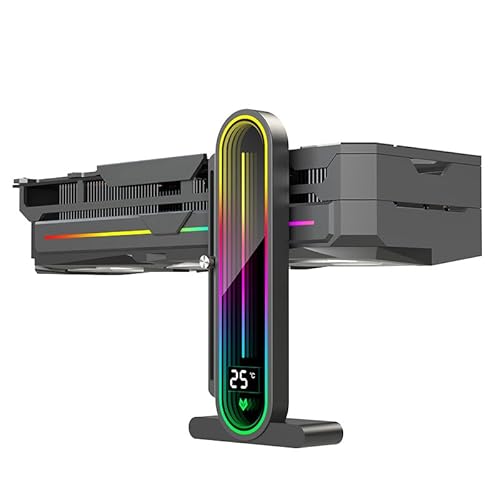
- Automatic temperature display with 1°C readings
- Sliding height adjustment for precise support
- 5V 3-pin ARGB lighting and magnetic anti-slip base
Best For: ARGB-equipped builds wanting visible GPU support and monitoring
Best Premium Enclosure – Razer Core X V2
For shoppers comparing external gpu enclosures for full size graphics cards, the Razer Core X V2 is a feature-rich option for compatible Windows 11 laptops and devices. It supports NVIDIA and AMD desktop GPUs up to four slots wide, PCIe 4.0, Thunderbolt 4/5, and USB 4 devices.
Best For: Users who want a tool-free, actively cooled enclosure with Thunderbolt 5 connectivity and 140W USB-C power delivery.
Pros:
- Fits PCIe desktop graphics cards up to four slots wide.
- Thunderbolt 5 offers bandwidth up to 80 Gbps.
- Includes a 120 mm fan and supports ATX power supplies.
- Provides up to 140W power delivery through USB-C.
Cons:
- Graphics card and power supply are sold separately.
- Not compatible with Macs using M1 or later chipsets.
- Requires a compatible Thunderbolt 4/5 or USB 4 device.
The Core X V2 stands out when you need a conventional enclosure for a large desktop GPU and value simple installation, active cooling, and broad modern-device compatibility.
Best Vertical Mount – EZDIY-FAB PCIe 4.0 GPU Bracket
Although it is not a standalone enclosure, this EZDIY-FAB bracket can be useful alongside external gpu enclosures for full size graphics cards when you want to mount a GPU vertically inside a compatible desktop tower. It supports most one-, two-, and three-slot cards and includes a PCIe 4.0 x16 riser cable.
Best For: Desktop builders who want vertical GPU presentation, adjustable cable access, and synchronized 5V ARGB lighting.
Pros:
- Supports most one-, two-, and three-slot graphics cards.
- Includes a PCIe 4.0 x16, 17 cm riser cable.
- Stretchable structure helps with HDMI and DisplayPort cable access.
- Works with compatible 5V three-pin ARGB motherboard headers.
Cons:
- Designed for compatible ATX or mid-tower cases, not as a standalone eGPU enclosure.
- Requires at least seven available PCI slots in the case.
- Its ARGB connector is not compatible with four-pin 12V RGB headers.
This is a mounting and display solution rather than a complete external enclosure. Check case clearance, PCI slot availability, and riser length before buying.
Best M.2-Based Dock – RGEEK NVMe M.2 eGPU Dock
For a modular approach to external gpu enclosures for full size graphics cards, this RGEEK dock connects an external desktop GPU to a Mini PC, NUC, or laptop through an NVMe M.2 interface. Its PCIe 5.0 x4 design supports newer graphics cards and full-size cards without a stated length restriction.
Best For: Experienced users with an accessible NVMe M.2 slot who already have an ATX power supply and want a flexible open eGPU setup.
Pros:
- Supports PCIe 5.0 graphics cards with backward compatibility.
- Advertises up to 128 Gbps bandwidth through PCIe 5.0 x4.
- Includes a flexible, shielded 50 cm M.2 riser cable.
- Offers status indicators and auto or forced power-start modes.
Cons:
- Works only with NVMe M.2 protocols, not M.2 SATA, Wi-Fi, or WWAN.
- Graphics card and ATX power supply are not included.
- Requires an ATX power supply above 500W and powered-off installation.
This dock offers considerable flexibility, but it is less plug-and-play than a closed enclosure. Confirm the computer has a suitable NVMe M.2 connection and install current GPU drivers before use.
Best Anti-Sag Support – upHere G276WTARGB GPU Brace
This upHere brace is an accessory rather than an enclosure, but it can complement external gpu enclosures for full size graphics cards when a large card needs additional physical support. Its adjustable slide design accommodates different card lengths and support positions inside desktop cases.
Best For: Desktop users who need adjustable anti-sag support with motherboard-synchronized 5V ARGB lighting.
Pros:
- Sturdy iron construction helps support heavy graphics cards.
- Two-way adjustment accommodates different card lengths and positions.
- Includes a built-in 5V three-pin ARGB strip.
- Designed to fit a wide range of motherboards and cases.
Cons:
- It supports a GPU but does not provide enclosure, connectivity, or power functions.
- ARGB lighting must not be connected to a four-pin 12V RGB header.
- Its listed display and graphics details are not a substitute for enclosure compatibility specifications.
Choose this brace when your main concern is preventing GPU bending or sagging. It is best considered a supporting accessory for a desktop graphics-card setup, not an external GPU enclosure.
Desktop-Class Expansion – Razer Core X Aluminum eGPU Enclosure
For shoppers comparing external gpu enclosures for full size graphics cards, the Razer Core X is built around desktop-grade expansion for Thunderbolt 3 laptops. It supports PCIe full-sized cards up to three slots wide and includes a substantial power supply, but the graphics card is purchased separately.
Best For: Thunderbolt 3 Windows laptops and compatible Mac computers that need a full-size external GPU enclosure.
Pros:
- Supports up to three-slot-wide, full-sized PCIe desktop graphics cards.
- Includes a 650W ATX power supply.
- Provides up to 100W laptop charging over Thunderbolt 3.
- Supports compatible NVIDIA or AMD cards on Windows.
Cons:
- Requires a Thunderbolt 3 laptop with compatible external-graphics support.
- macOS compatibility is limited to compatible AMD graphics cards; NVIDIA cards are not supported.
- Graphics card is not included.
The Core X is the most complete option here for turning a compatible Thunderbolt 3 laptop into a desktop-style graphics setup. Confirm laptop, operating-system, and graphics-card compatibility before buying.
Flexible GPU Stability – GSCOLER Dual-Mode GPU Support Bracket
Although it is not an enclosure, the GSCOLER bracket can complement external gpu enclosures for full size graphics cards by helping support a heavy card and reduce sag. Its adjustable 35–120mm range and dual mounting modes suit different chassis layouts.
Best For: Builders who need adjustable anti-sag support for a compatible graphics card in a horizontal or vertical setup.
Pros:
- Adjusts from 35 to 120mm to fit many graphics cards.
- Supports vertical or horizontal installation.
- Offers screw mounting or a tool-free 3M pad option.
- ABS construction and sponge pads help reduce slot load and contact risk.
Cons:
- It is a support bracket, not an external GPU enclosure.
- Its 80°C long-term temperature-resistance claim may not suit every enclosure environment.
- Compatibility depends on available chassis mounting space.
This is a practical accessory for stabilizing a large GPU, especially when a build allows either mounting orientation. Verify the 35–120mm adjustment range and mounting location before purchase.
Compact Anti-Sag Support – Jeymei Small Aluminum GPU Support Bracket
For external gpu enclosures for full size graphics cards that need extra physical support, the Jeymei bracket is a compact anti-sag accessory rather than an enclosure. Its aluminum construction, magnetic base, and tool-free height adjustment make it suited to smaller spaces.
Best For: ATX, Micro-ATX, and ITX chassis that need a compact brace for a supported graphics card.
Pros:
- Durable all-aluminum construction.
- Magnetic base helps it stand securely in the chassis.
- Tool-free height adjustment from 1.46 to 1.97 inches.
- Compact design can help support the far end of a heavy GPU.
Cons:
- It is a GPU support bracket, not an external GPU enclosure.
- The listed height range is limited to 1.46–1.97 inches.
- Very large or heavy graphics cards may require two or more brackets.
The Jeymei is a straightforward choice when enclosure or chassis clearance is tight and a small support point is sufficient. Measure the gap beneath the card before ordering.
Fan-Mounted Stability Pick – Adjustable Aluminum GPU Support Bracket
For external gpu enclosures for full size graphics cards, this adjustable support bracket is a practical way to reduce card movement and sag. It mounts to a fan and uses an 80 mm adjustable height, while its aluminum construction is designed for long-term use.
Best For: Users who need a fan-mounted, adjustable support for a compatible graphics card setup.
Pros:
- Installs on a fan and is designed not to block the fan air outlet.
- All-aluminum construction provides a stable support structure.
- Height adjusts to 3.15 inches (80 mm) without additional tools.
- Includes two screw types for compatibility with most fans.
Cons:
- Some fan screws may not be compatible.
- Buyers should confirm the 80 mm height works with their device before purchasing.
This is a straightforward support accessory rather than an enclosure, but it can help stabilize a full-size GPU where the fan-mounting arrangement and dimensions are suitable.
Compact Case Support Pick – upHere G205 Aluminum GPU Brace
When evaluating accessories for external gpu enclosures for full size graphics cards, the upHere G205 focuses on compact, case-based bracing. Its segmented sliding design supports single or dual-slot cards, while the concealed magnetic base helps it stand firmly inside a compatible case.
Best For: MATX, ITX, and long-PSU-bracket cases needing compact GPU or fan support.
Pros:
- All-aluminum alloy construction is intended for durable, long-term support.
- Segmented slide design fits traditional MATX and ITX cases.
- Can support up to two graphics cards or CPU fans.
- Hidden magnetic base and tool-less screws simplify positioning and installation.
Cons:
- Compatibility depends on the case layout and available mounting space.
- It is a brace or holder, not a complete GPU enclosure.
The G205 is a sensible choice for buyers prioritizing a small footprint, aluminum construction, and flexible placement inside a compatible computer case.
ARGB Monitoring Pick – Temperature Display GPU Stand
For external gpu enclosures for full size graphics cards, this GPU stand adds visual monitoring alongside anti-sag support. It uses sliding height adjustment, a magnetic base, an automatic temperature display, and 5V 3-pin ARGB connectivity for compatible systems.
Best For: Builders who want adjustable GPU support with temperature visibility and ARGB lighting.
Pros:
- Displays chassis temperature in 1°C increments using automatic sensing.
- Sliding support frame allows precise height positioning and hand-tightened fixation.
- Magnetic anti-slip base helps reduce vibration and protect the mounting surface.
- Supports 5V 3-pin ARGB motherboard connection and includes a 600 mm cable.
Cons:
- ARGB features require a compatible 5V 3-pin connection.
- The stand needs suitable clearance and a stable chassis surface for its magnetic base.
- It is a GPU stand, not a protective enclosure.
This model suits a display-focused build where GPU bracing, temperature feedback, and lighting are all useful, provided the enclosure or chassis supports its connections and placement.
How We Picked the Best External GPU Enclosures for Full Size Graphics Cards
We focused on compatibility, expandability, physical fit, power delivery, connection standards, and practical installation. A complete enclosure should provide a suitable PCIe slot, enough room for the intended graphics card, adequate cooling, and a power supply matched to the card. Open PCIe docks can be useful for custom builds, but they generally offer less protection and may require a separate power supply.
Because this selection also includes GPU brackets and anti-sag supports, we distinguish between products that add graphics capability and accessories that stabilize a graphics card already installed in a desktop or open-frame setup.
Quick Comparison
- Best enclosed upgrade path: Razer Core X V2, when your laptop supports Thunderbolt 4, Thunderbolt 5, or compatible USB4 connectivity.
- Best established enclosure option: The original Razer Core X, particularly for compatible Thunderbolt 3 Windows or macOS systems.
- Best for a custom or experimental build: An NVMe M.2 or PCIe dock, provided you can supply power and accept an open design.
- Best for GPU stability: An adjustable brace or stand, especially for large, heavy cards in desktop or test-bench systems.
Key Buying Factors for External GPU Enclosures for Full-Size Graphics Cards
Connection and Bandwidth
Check the host port before buying. Thunderbolt 3, Thunderbolt 4, Thunderbolt 5, and USB4 are not interchangeable in every implementation, and actual performance depends on the laptop, controller, drivers, and display connection. M.2-based docks require an accessible compatible slot and are better suited to desktop-style or internal installations than casual laptop upgrades.
GPU Clearance and Slot Layout
Full-size graphics cards vary widely in length, height, thickness, and power-connector placement. Confirm the enclosure’s maximum card dimensions and slot width, then leave room for airflow and cable bends. A four-slot design can accommodate substantially larger cards than a compact two-slot enclosure.
Power, Cooling, and Ports
Compare the enclosure’s wattage with the graphics card’s recommended power supply and transient demands. Look for effective ventilation, a suitable fan layout, and convenient access to the card’s video outputs. Some enclosures also provide laptop charging or USB connectivity, but those features may share bandwidth with the GPU.
Operating System and Setup
Verify support for your exact Windows or macOS version and graphics-card vendor. Driver behavior, hot-plug support, sleep and wake reliability, and external-monitor compatibility can differ by platform. An enclosed product is usually simpler to manage, while an open dock may require more troubleshooting.
Who Should Buy Which External GPU Enclosures for Full Size Graphics Cards?
Laptop gamers and creators should prioritize a fully enclosed Thunderbolt or USB4-compatible unit with enough clearance and power for the selected card. Owners of compact PCs or custom workstations may prefer an open PCIe or M.2 dock if they need flexible component access and already have a suitable power supply.
Desktop builders with GPU sag do not need an eGPU enclosure; an adjustable support bracket is the more appropriate purchase. Choose a compact support for a small card, a height-adjustable model for uneven case layouts, or a magnetic-base and ARGB option when appearance and positioning matter. Before ordering, confirm whether the bracket’s base, lighting connector, and adjustment range fit your case and motherboard.