Choosing the right citrus juicer can improve drink consistency, reduce prep time, and make fresh juice service easier during busy shifts. The best option depends on your daily volume, available counter space, labor, and cleanup routine.
We selected 10 manual and electric models for cafés, bars, restaurants, juice counters, and other small food-service operations, with an emphasis on speed, durability, ease of use, and value.
Best 10 Citrus Juicers for Small Businesses Picks for 2026
Best Manual Value
VEVOR 15-Inch Hand Press Juicer
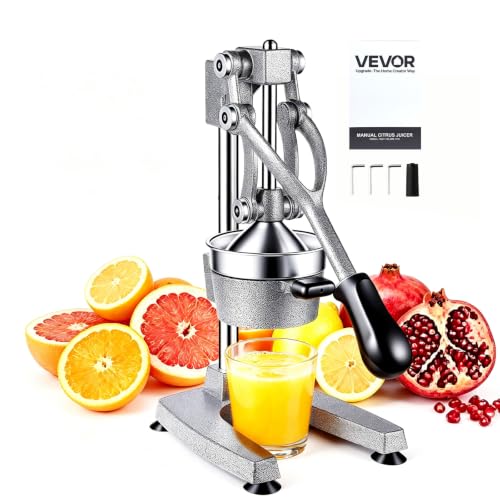
- Electricity-free lever operation
- Cast-iron frame with suction cups
- Detachable stainless-steel contact parts
Best For: Lower-volume juice bars and restaurant prep areas
Best Compact Electric Option
Waring BJ120C Commercial Citrus Juicer

- Compact counter-friendly design
- Up to 120 oranges per hour
- Dishwasher-safe product care
Best For: Small bars and cafés with limited counter space
Best Assisted Press
Breville 800CPXL Citrus Press Pro
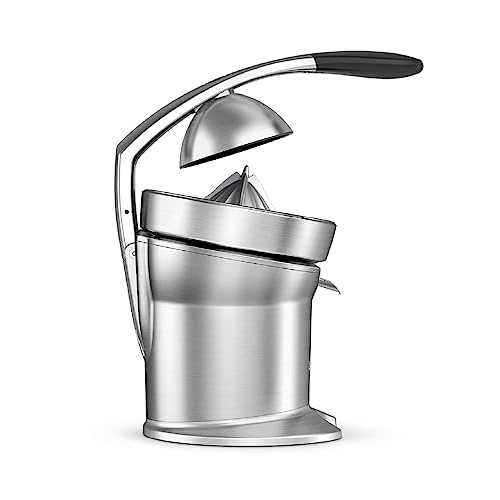
- Power-assisted triple-hinged arm
- Acid-resistant die-cast cone
- Dishwasher-safe removable parts
Best For: Cafés and juice counters prioritizing easy, controlled pressing
Best Commercial Manual Press
Hamilton Beach 932 Citrus Juicer

- Up to 2,000 pounds of pressing force
- Acid-resistant metal and enamel construction
- NSF certified with removable parts
Best For: Bars and restaurants needing a durable manual press
Efficient Countertop Pick
Eurolux Electric Citrus Juicer

- 120-watt quiet motor with automatic operation
- Universal cone for varied citrus sizes
- Integrated filter and dishwasher-safe parts
Best For: Cafes and low-to-moderate-volume beverage service
Heavy-Duty Manual Pick

- Cast iron construction for repeated pressing
- 5-inch bowl handles citrus from limes to grapefruits
- No electricity or batteries required
Best For: Bars, restaurants, and manual cocktail service
High-Volume Commercial Pick

- Processes up to 20 oranges per minute
- Automatic peeling, juicing, and filtering
- Large commercial unit with detachable cleaning parts
Best For: Busy juice bars, fruit shops, and restaurants
Best Adjustable Electric Pick
Cuisinart Pulp Control Citrus Juicer

- Three adjustable pulp settings
- Cone handles limes through grapefruits
- Dishwasher-safe parts and 3-year warranty
Best For: Small cafes and counters needing customizable pulp
Best Manual Commercial Press
ROVSUN Commercial Citrus Juicer

- Heavy-duty cast-iron construction
- No outlet required for operation
- Presses citrus and pomegranates without rubbing the rind
Best For: Restaurants, bars, and mobile or power-limited setups
Best Quiet One-Touch Option
Eurolux Electric Citrus Juicer

- Quiet 300-watt motor with auto-reversing action
- One-touch, hands-free operation
- Top-rack dishwasher-safe detachable parts
Best For: Compact cafes and counters prioritizing easy service
Best Manual Value – VEVOR 15-Inch Hand Press Juicer
For small businesses seeking citrus juicers for small businesses without adding another appliance to the counter, this VEVOR manual press offers straightforward, electricity-free extraction. Its tall frame, broad fruit compatibility, and suction-cup base make it practical for lower-volume juice bars, restaurants, and prep areas.
Best For: Juice bars, restaurants, and small commercial kitchens that want a manual citrus press.
Pros:
- Manual lever design requires no electricity and is intended to improve juice extraction.
- Works with oranges, lemons, limes, grapefruits, pomegranates, and other suitable fruits.
- Heavy-duty cast-iron frame, widened base, and four suction cups help keep it stable.
- Food-contact stainless-steel parts detach for easier cleaning.
Cons:
- Hand wash only, so cleanup is less convenient than with dishwasher-safe models.
- The bowl accommodates fruit up to 3 inches in diameter, which may limit larger produce.
- At 15 inches tall and 13.5 pounds, it requires dedicated storage space.
This is a sensible choice when durability, stability, and no-power operation matter more than automated throughput. It suits businesses producing fresh juice in batches rather than continuously.
Best Compact Electric Option – Waring BJ120C Commercial Citrus Juicer
For small businesses needing citrus juicers for small businesses in a tight workspace, the Waring BJ120C combines a compact footprint with electric operation. Its universal reamer is designed for different citrus fruits, while the stated capacity reaches up to 120 oranges per hour.
Best For: Small bars, cafés, and restaurants that need compact electric citrus service.
Pros:
- Compact 7.25-inch square footprint fits smaller counters.
- Rated to juice up to 120 oranges per hour.
- Universal reamer handles a range of citrus fruits.
- Die-cast base and vibration-dampening feet support quiet, stable operation.
Cons:
- Its 1-quart capacity may require frequent emptying during busy service.
- It has one speed and a 150-watt motor, limiting control over operating pace.
- The product notes list a plastic body rather than a stainless-steel construction.
The Waring is a practical fit when counter space and service speed are priorities. Its dishwasher-safe care and compact design can simplify routine use in a smaller commercial setting.
Best Assisted Press – Breville 800CPXL Citrus Press Pro
Businesses comparing citrus juicers for small businesses may prefer the Breville 800CPXL when easy pressing and versatile citrus handling are priorities. Its power-assisted arm, finned cone, safety switch, and drip-stop spout are designed to make repeated service more controlled and less messy.
Best For: Cafés, juice counters, and restaurants wanting assisted pressing with flexible citrus size handling.
Pros:
- Power-assisted lever and triple-hinged arm reduce the effort needed to press fruit.
- Quadra-Fin, acid-resistant die-cast cone is designed to extract citrus of various sizes.
- Dual-switch safety design prevents the cone from spinning until the arm is lowered.
- Removable dishwasher-safe components and a drip-stop spout help streamline cleanup.
Cons:
- Its 10.3-by-14.02-inch footprint is larger than a compact bar juicer.
- The 800 ml capacity may be modest for sustained high-volume service.
- At 10.6 pounds, it is less convenient to move between workstations.
The 800CPXL balances commercial-style materials with user-friendly assisted pressing. It is particularly appealing when staff comfort, clean dispensing, and broad citrus versatility are worth the larger footprint.
Best Commercial Manual Press – Hamilton Beach 932 Citrus Juicer
For operators evaluating citrus juicers for small businesses, the Hamilton Beach 932 is a commercial-grade manual press focused on extraction force and food-service durability. Its arm applies up to 2,000 pounds of force, while the acid-resistant finish and NSF certification support demanding prep environments.
Best For: Restaurants, bars, and food-service operations wanting a durable manual citrus extractor.
Pros:
- Manual extractor arm provides up to 2,000 pounds of force for high juice output.
- Metal construction and enamel finish resist wear from citrus acids.
- Sure Grip feet help prevent tipping during use.
- Removable stainless-steel strainer cone and ABS funnel simplify cleaning and sanitizing.
Cons:
- Hand wash only, requiring manual cleaning after service.
- At 19.5 inches tall, it needs substantial vertical clearance.
- The listed 8-fluid-ounce capacity may require repeated collection during larger runs.
The 932 is a strong match for businesses that value rugged manual operation and certified food-service construction. Its tall profile and hand-cleaning requirement are trade-offs for its forceful extraction and stable design.
Efficient Countertop Pick – Eurolux Electric Citrus Juicer
For small businesses seeking citrus juicers for small businesses that balance convenience and countertop appeal, the Eurolux offers one-touch electric operation, a 120-watt motor, and a stainless steel build. Its universal cone is designed for different citrus sizes, while the integrated filter helps produce seedless juice.
Best For: Cafes, offices, and low-to-moderate-volume beverage service where easy operation and compact countertop use matter.
Pros:
- Soft-grip handle starts the automatic juicing cycle with light pressure.
- Quiet, energy-efficient 120-watt motor with auto-on/off operation.
- Universal cone accommodates most citrus shapes and sizes without changing attachments.
- Dishwasher-safe parts and an integrated filter simplify cleanup and straining.
Cons:
- Its 120-watt motor is better suited to smaller service volumes than heavy commercial throughput.
- The supplied dimensions indicate a relatively substantial countertop footprint.
- Product-care details should be checked carefully because the listed dishwasher-safe feature applies to the parts, not necessarily the entire unit.
The Eurolux is a practical choice when staff-friendly operation and clean, filtered juice are priorities. It is less compelling for businesses that need automated high-volume processing, but it should fit routine citrus service well.
Heavy-Duty Manual Pick – Zulay Cast Iron Citrus Press
For businesses comparing citrus juicers for small businesses without adding another electrical appliance, the Zulay cast iron press provides leverage-driven manual extraction. Its 5-inch bowl handles limes through grapefruits, and the stainless steel components are designed to help keep seeds and excess pulp out of the glass.
Best For: Bars, restaurants, juice stands, and cocktail stations that want durable manual pressing with no electricity or batteries.
Pros:
- Heavy-duty cast iron construction is designed for repeated high-pressure use.
- Lever action reduces the effort needed to press thick-skinned citrus.
- Generous 5-inch bowl accommodates lemons, limes, oranges, and grapefruits.
- Rubberized feet help keep the press stable during use.
Cons:
- Manual operation requires staff to load and press each fruit individually.
- Hand-wash-only care may take more time than electric models with dishwasher-safe parts.
- Its tall 15.75-inch profile may require more vertical clearance than a countertop electric juicer.
The Zulay is a strong fit for businesses that value longevity, control, and dependable operation over automation. It can handle demanding manual use, though high-volume service may require additional presses or staff time.
High-Volume Commercial Pick – VEVOR Orange Juicer Machine
Among citrus juicers for small businesses, the VEVOR is the most production-oriented option in this group. Its semi-automatic system combines peeling, juicing, and filtering, and the 120-watt motor is rated to process up to 20 oranges per minute for commercial beverage settings.
Best For: Juice bars, fruit shops, restaurants, grocery stores, and other businesses needing faster automated orange processing.
Pros:
- Rated for processing up to 20 oranges per minute.
- Combines peeling, juicing, and filtering in one semi-automatic unit.
- Large feed chute accepts citrus and pomegranates measuring about 55–80 mm.
- Detachable components, a pull-out filter box, and a peel-collecting bucket support routine cleaning.
Cons:
- At 86.2 pounds and over 30 inches tall, it requires substantial floor or counter space.
- Hand-wash-only care may make daily cleaning more labor-intensive.
- Its specialized commercial design may be excessive for businesses with occasional citrus orders.
The VEVOR makes the most sense when throughput is the deciding factor. Its size and cleaning demands are significant, but the automated workflow and stated 20-oranges-per-minute capacity can justify the footprint for busy operations.
Best Adjustable Electric Pick – Cuisinart Pulp Control Citrus Juicer
For small businesses seeking citrus juicers, the Cuisinart CCJ-500P1 is a compact electric option with adjustable pulp control. Its universal cone accommodates limes through grapefruits, while the final-spin feature helps extract additional juice from the pulp.
Best For: Cafes, juice counters, and small food-service operations that need adjustable pulp settings and straightforward electric operation.
Pros:
- Three pulp-control settings: low, medium, and high.
- Auto-reversing cone accommodates a wide range of citrus sizes.
- Dishwasher-safe parts and an extra-long snap-up spout simplify service and cleanup.
- Includes a three-year limited manufacturer warranty.
Cons:
- Its 12-ounce capacity may require frequent emptying during busy periods.
- The unit is rated at 25 watts in the supplied specifications, so it may be better suited to lighter-duty use than high-volume production.
The Cuisinart is a practical fit when pulp customization and easy cleanup matter more than large-batch capacity. It offers useful versatility for smaller service volumes in a relatively compact countertop format.
Best Manual Commercial Press – ROVSUN Commercial Citrus Juicer
Among citrus juicers for small businesses, the ROVSUN hand press suits operations that want manual extraction without an electric motor. Its cast-iron body, 304 stainless-steel strainer, and long rubber-grip handle are designed for pressing oranges, lemons, limes, grapefruits, and pomegranates.
Best For: Restaurants, bars, markets, and event setups that need a portable manual press for fresh juice.
Pros:
- Manual design requires no electrical outlet.
- Heavy-duty cast-iron construction with a 304 stainless-steel strainer.
- Long handle is designed to reduce hand pressure during pressing.
- Removable strainer cone and funnel support cleanup.
Cons:
- Hand-wash-only care requires more hands-on cleanup.
- Manual pressing may be less convenient than one-touch electric operation during sustained rushes.
- At 14.57 inches tall and 6.1 kilograms, it needs a stable, dedicated storage or counter location.
The ROVSUN is a strong choice for businesses that value durability, portability, and juice without rind contact. Its manual format can also simplify placement where power access is limited, though staff must operate every press.
Best Quiet One-Touch Option – Eurolux Electric Citrus Juicer
For small businesses prioritizing simple service, the Eurolux ELCJ-4800 provides one-touch electric citrus juicing with a 300-watt motor. Its quiet operation, auto-reversing feature, and dishwasher-safe food-contact parts make it convenient for compact counters and shared spaces.
Best For: Small cafes, breakfast counters, and compact kitchens that want hands-free operation with minimal cleanup.
Pros:
- One-button operation supports quick, hands-free juicing.
- 300-watt motor runs at a stated 110 RPM for citrus extraction.
- Detachable food-contact parts are top-rack dishwasher safe.
- Stainless-steel body, secure locking, and a stable base support regular use.
Cons:
- The supplied dimensions are inconsistent, listing both a 22 x 19 x 31.7 cm footprint and 4 x 8 x 4 inches.
- Its notes focus on oranges, lemons, limes, and grapefruit rather than a broader range of fruit.
- Parts should be rinsed or washed soon after use to limit residue buildup.
The Eurolux makes a compelling choice when quiet, low-effort operation is central to the workflow. Its one-touch design and dishwasher-safe components can reduce routine labor, while the compact stainless-steel styling suits customer-facing counters.
How We Picked the Best Citrus Juicers for Small Businesses
We compared these models by looking at the factors that matter most in commercial and light-commercial prep: expected output, pressing effort, construction, footprint, cleanup, ease of operation, and versatility across lemons, limes, oranges, grapefruits, and similar fruit. Manual presses can be dependable and inexpensive for moderate volume, while electric models are usually better when staff need to produce juice quickly with less physical effort.
Product specifications and stated capacities should be treated as guidelines rather than guaranteed service rates. Actual output varies with fruit size, ripeness, operator technique, and how often the machine needs to be cleaned.
Quick Comparison
| Type | Best For | Main Advantage | Potential Trade-Off |
|---|---|---|---|
| Manual countertop press | Bars, cafés, and moderate batches | Simple, durable, and low maintenance | Requires operator effort |
| Compact electric juicer | Regular drink and breakfast service | Faster, easier pressing | More parts to clean and maintain |
| Commercial electric press | High-volume citrus preparation | Speed and reduced labor | Higher cost and larger footprint |
| Consumer-style electric model | Low-volume cafés and small counters | Compact and user-friendly | May not suit continuous heavy-duty use |
Key Buying Factors for Citrus Juicers for Small Businesses
Volume and Speed
Estimate the busiest hour, not just your average daily demand. A manual press may be sufficient for occasional garnishes or made-to-order drinks, but a busy juice bar should prioritize a stated commercial capacity, motor performance, and fast fruit loading.
Manual Versus Electric Operation
Manual juicers generally have fewer failure points and can last for years when built with sturdy metal components. Electric juicers reduce repetitive strain and improve throughput, but they add motor noise, electrical requirements, and additional parts that require cleaning.
Construction and Stability
Look for stainless steel or other corrosion-resistant components, a stable base, non-slip feet, and a handle or lever that does not flex under pressure. Acid-resistant finishes are especially useful in commercial environments where citrus juice is frequently spilled.
Juice Quality and Versatility
Check whether the juicer accommodates the fruit sizes you use most. Adjustable pulp control can help cafés and beverage programs offer different textures, while a broad reamer or cup can make switching between limes, lemons, oranges, and grapefruits easier.
Cleaning and Workflow
Removable strainers, cones, and collection cups simplify sanitation. Choose a model that staff can rinse promptly between batches and that does not leave juice trapped around seams, hinges, or motor housings. Also confirm that the unit fits comfortably beneath cabinets and near your prep area.
Who Should Buy Which Citrus Juicers for Small Businesses?
Choose a Manual Press If You Value Durability and Simplicity
Manual models are a strong fit for cocktail bars, cafés, and restaurants with moderate citrus demand. They are also useful as a backup when an electric machine is unavailable.
Choose a Compact Electric Juicer for Everyday Café Service
Compact electric machines suit businesses that need regular fresh juice but have limited counter space. They are convenient for breakfast service, coffee bars, and made-to-order beverages.
Choose a Commercial Electric Model for Sustained Volume
If your staff regularly process large batches or serve fresh juice throughout the day, prioritize a commercial electric press with a clear capacity rating, robust housing, and accessible removable parts.
Before buying, match the juicer to your busiest service period, available labor, sanitation process, and counter layout. The best citrus juicer is not necessarily the fastest model; it is the one your team can operate consistently, clean efficiently, and rely on every day.