Making bread, pizza, pasta, or sourdough at home is easier when the machine handles repetitive kneading without taking over your counter. The best dough kneading machines for small kitchens balance useful capacity with compact storage, straightforward controls, and manageable cleanup.
This roundup compares 10 options ranging from lightweight stand mixers to dedicated dough makers with fermentation functions. Use the guide below to match capacity, features, and footprint to your baking routine.
Best 10 Dough Kneading Machines for Small Kitchens Picks for 2026
Compact Stand Mixer
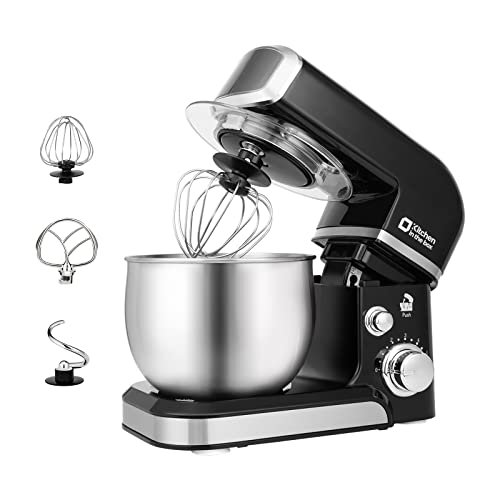
- 3.2-quart bowl and lightweight compact design
- Six speeds with dough hook, whisk, and beater
- Four suction cups improve stability
Best For: Apartments, couples, and small baking batches
Fermentation Dough Kneader

- Dedicated kneading for bread, pizza, pasta, and sourdough
- Handles up to 1.4 kg of dough
- Timer and 100°F fermentation function
Best For: Home bakers focused on hands-free dough preparation
Best Fermentation Pick

- Mixes and ferments in one appliance
- 77–100°F fermentation range
- Wide ingredient-addition opening
Best For: Home bakers wanting integrated dough proofing
Best for Large Batches

- Largest 7.4-quart capacity
- Kneads and ferments in one bowl
- Suction feet improve stability
Best For: Families making larger batches regularly
Best Timed Compact Option

- Adjustable 5–40 minute timer
- Automatic shutoff after kneading
- Compact 5-liter stainless steel setup
Best For: Small kitchens needing programmable kneading
Most Versatile

- Four modes for dough, fermentation, and fillings
- Adjustable mixing and fermentation times
- Stainless steel bowl with stable suction-cup base
Best For: Home bakers seeking broad functionality in one machine
Compact Stand Mixer – Small-Kitchen Daily Mixer
For shoppers comparing dough kneading machines for small kitchens, this lightweight stand mixer is an accessible option for everyday baking. Its 3.2-quart bowl, compact footprint, six speeds, and included dough hook make it suited to smaller batches while also handling batters, whipped cream, and meringues.
Best For: Apartment kitchens, couples, new bakers, and anyone who wants one compact mixer for dough and general baking tasks.
Pros:
- Compact 12.9-by-7-by-10.2-inch design weighs less than 7 pounds.
- Six speeds support bread dough, thick batters, whipping, and delicate mixing.
- Includes a stainless steel whisk, aluminum dough hook, flat beater, and 3.2-quart bowl.
- Four suction cups help keep the mixer stable during operation.
Cons:
- The 3.2-quart capacity is better suited to small batches than large family-size baking.
- At 300 watts, it is a general-purpose compact mixer rather than a specialized high-capacity dough machine.
This is a practical pick when counter and storage space matter most. Choose it for versatility and portability; frequent large-batch dough makers may prefer one of the dedicated kneaders below.
Timed Dough Maker – Large-Batch Kneading and Proofing
This Joydeem model is a dedicated choice among dough kneading machines for small kitchens, combining a vertical, space-conscious design with timed kneading and fermentation. Its 6.6-quart capacity and preset programs are useful when you want to prepare bread, pizza, buns, or dumpling dough with less hands-on work.
Best For: Larger households and home bakers who want automated kneading plus proofing in one stainless steel dough maker.
Pros:
- 6.6-quart capacity can handle larger family-sized batches.
- Microcomputer controls provide preset timing and program selection.
- Can knead dough in about 15 minutes or knead and proof in about 45 minutes.
- Stainless steel bucket and blade are dishwasher safe, while the removable top cover simplifies cleaning.
Cons:
- Its 11.6-by-11.4-by-13-inch footprint is larger than a compact stand mixer.
- The machine has one speed rather than adjustable speed control.
- The listed noise level is 70 dB, so it may not be the quietest option.
The generous capacity and fermentation function make this a strong automation-focused option. Its vertical layout helps with space efficiency, but confirm that your cabinets can accommodate the 13-inch height.
Fermentation Dough Kneader – Quiet 5.3-Quart Home Baker
Designed specifically for dough, this 5.3-quart machine is a focused alternative to multipurpose mixers and fits the needs of home bakers comparing dough kneading machines for small kitchens. It provides hands-free kneading, a timer, and built-in fermentation for bread, pizza, pasta, and sourdough dough.
Best For: Home bakers who prioritize dedicated dough kneading, family-size batches, and controlled proofing.
Pros:
- Dedicated low-speed kneading action is designed for bread, pizza, pasta, and sourdough.
- 5.3-quart 304 stainless steel bowl accommodates up to 1.4 kg of dough.
- Timer and fermentation heating can warm dough to 100°F (38°C).
- High-torque, low-speed motor is designed for stable, low-noise operation.
Cons:
- At 12.6-by-11.4-by-11.8 inches, it needs a substantial countertop or storage space.
- Its 150-watt motor and dough-focused design are less suited to general mixing tasks than a stand mixer.
This model makes the most sense for users who primarily knead dough and want proofing assistance. The stainless steel bowl and 1.4-kg dough limit offer a useful middle ground between compact mixers and larger dough makers.
Seasonal Fermentation Maker – Adjustable 3.7-Quart Dough Kneader
For smaller households seeking dough kneading machines for small kitchens, the Joydeem HMJ-A351 offers a relatively compact 3.7-quart format with adjustable mixing and fermentation times. Its seasonal fermentation modes are designed to maintain different temperature ranges for more consistent proofing throughout the year.
Best For: Small households and bakers making bread, pizza, pasta, sourdough, roti, dumplings, or steamed buns in moderate batches.
Pros:
- 3.7-quart bowl handles stated flour amounts from 200 to 1,100 grams.
- Summer and Winter fermentation modes maintain different temperature ranges.
- Adjustable mixing times run from 5 to 40 minutes, with fermentation settings up to 120 minutes.
- 304 stainless steel bowl and blade, plus four silicone suction cups for stability.
Cons:
- The maximum flour weight for fermented dough is listed as 900 grams.
- It has intermittent kneading and no speed adjustment.
- The 13.2-by-12-by-12.5-inch dimensions may be sizeable for the smallest counters.
This is a well-matched option for bakers who want dedicated kneading and seasonal proofing without moving to the largest capacity class. Its adjustable time controls add flexibility, while the 3.7-quart bowl keeps batch sizes moderate.
Best Fermentation Pick – AIZIYO DoughChief 5.3QT
For shoppers comparing dough kneading machines for small kitchens, the AIZIYO DoughChief offers a useful balance of capacity and countertop-friendly design. Its 5.3-quart stainless steel bowl, 200-watt motor, touch controls, and built-in fermentation function cover everyday bread, pizza, pasta, and mochi preparation.
Best For: Home bakers who want mixing and temperature-controlled dough proofing in one appliance.
Pros:
- Mixes and ferments dough, with a stated 77–100°F fermentation range.
- Mix-pause-mix operation and an S-shaped stainless steel blade support more even kneading.
- Wide top opening allows ingredients to be added while mixing.
- Compact 11.8-inch square footprint and 9-pound weight suit many home setups.
Cons:
- Its 5.3-quart capacity is smaller than the largest family-size option in this roundup.
- The listed noise level is 75 dB.
- The fermentation function requires yeast or fermentation powder.
The DoughChief stands out when consistent proofing matters as much as kneading. It is a practical choice for small kitchens that need a dedicated dough maker without moving dough to a separate proofing container.
Best for Large Batches – 7.4Qt Electric Dough Maker
Among dough kneading machines for small kitchens, this 7.4-quart electric dough maker is the choice for cooks who still want substantial batch capacity. It combines mixing, kneading, and fermentation in one stainless steel bowl for bread, pizza, sourdough, rolls, dumplings, and other weekly baking projects.
Best For: Families and frequent bakers who need larger dough batches with less manual kneading.
Pros:
- 7.4-quart capacity accommodates larger homemade dough batches.
- Combines kneading and fermentation without requiring a separate bowl transfer.
- Intermittent kneading allows rest periods and may help limit heat buildup.
- Suction feet help stabilize the machine during heavier mixing.
Cons:
- Its 13.2-inch height may require more vertical storage space.
- The larger bowl may be more capacity than occasional bakers need.
- The supplied details list a fermentation function but do not specify a temperature range or timer controls.
This model prioritizes batch size and stability over the smallest possible footprint. Measure your available cabinet or counter space before choosing it, especially if your kitchen storage is limited.
Best Timed Compact Option – 5L Electric Dough Maker
If you are comparing dough kneading machines for small kitchens, this 5-liter silver model offers a relatively compact footprint with programmable timing. Its 200-watt motor, stainless steel bowl, visible lid, and included measuring accessories make it suited to routine household dough preparation.
Best For: Home cooks who value adjustable kneading times and a compact, easy-to-monitor setup.
Pros:
- Microcomputer timer supports adjustable 5–40 minute mixing and kneading cycles.
- Automatic shutoff stops the machine when the selected time is complete.
- Top opening makes it easier to add water during kneading, while the visible lid helps monitor the dough.
- Includes a measuring cup, measuring spoon, dough blade, and egg white separator.
Cons:
- Its 5-liter capacity is smaller than the 7.4-quart model.
- The listed noise level is 75 dB.
- The supplied information does not specify a fermentation temperature range.
The main advantage here is control: you can set a kneading duration and let the machine stop automatically. Its 11.42-inch depth and 9.45-inch width also make it worth considering where counter space is at a premium.
Most Versatile – Joydeem 9.5Qt Dough Maker
For shoppers comparing dough kneading machines for small kitchens, the Joydeem stands out for its combination of mixing, filling, and fermentation functions. Its vertical design, suction-cup base, and ingredient window make a large-capacity machine easier to manage on the countertop.
Best For: Home bakers who want one machine for dough, fillings, and seasonal fermentation.
Pros:
- Offers Mix, Blend, Ferment, and Mix + Ferment modes.
- Supports adjustable mixing times from 5 to 30 minutes and fermentation times from 5 to 120 minutes.
- Includes winter and summer fermentation settings with manually adjustable temperatures.
- 304 stainless steel bowl and blade, plus four silicone suction cups for stability.
Cons:
- The 9.5-quart footprint may be substantial for very limited counters.
- Its stated fermented-dough flour capacity is capped at 2,500g.
The Joydeem is a flexible choice if you regularly make several types of dough or fillings. It is less compact than a small mixer, but its broader programming and fermentation control may justify the space.
Best Large-Batch Value – 7.4Qt Fermenting Dough Mixer
Among dough kneading machines for small kitchens, this 7.4-quart model offers a relatively narrow 9.25-inch width while still providing room for larger batches. Its fermentation function and top ingredient window target convenient, mostly hands-off preparation.
Best For: Families and bakers who want large-batch capacity with automatic fermentation.
Pros:
- 7.4-quart stainless steel bowl handles dough for multiple loaves, pizzas, or pastries.
- Constant-temperature fermentation is designed for consistent proofing.
- Top window allows water, seasoning, or other ingredients to be added during mixing.
- Intermittent mixing is intended to help prevent overheating and premature rising.
Cons:
- Only one listed speed may offer less control than multi-speed mixers.
- Its large capacity can still take up meaningful counter space despite the compact width.
This model makes sense when fermentation convenience and batch size matter more than extensive speed controls. The digital display, timer function, and ingredient window support a straightforward workflow for routine baking.
Quietest Design – 7.4Qt Automatic Fermenting Mixer
This 7.4-quart model is a practical option among dough kneading machines for small kitchens, particularly where noise and cleanup matter. The detachable dishwasher-safe bowl, silicone noise-reduction pad, and face-up touch panel are designed for convenient everyday use.
Best For: Home cooks who prioritize quieter operation and automatic post-kneading fermentation.
Pros:
- Automatically begins fermentation after kneading at 77–100°F.
- Detachable stainless steel bowl is dishwasher safe.
- Silicone base pad helps reduce operating noise.
- Clear lid and top feeding window make it easier to monitor and adjust the mix.
Cons:
- The 250W motor and touch controls offer a relatively focused feature set rather than extensive speed options.
- Its 7.4-quart capacity may be more than needed for very small batches.
The HZ-008 is a strong fit for users who want a simple dough-to-fermentation sequence with easier cleanup. Its stated 300g-to-2100g flour range also gives it flexibility for family-sized baking without requiring a commercial-scale machine.
How We Picked the Best Dough Kneading Machines for Small Kitchens
We focused on the factors that matter most in a limited kitchen: countertop footprint, bowl capacity, dough-handling ability, control simplicity, and storage practicality. The selection includes compact stand mixers and dedicated dough machines, so shoppers can compare basic kneading with models that also support timed fermentation or ingredient mixing.
We also considered useful specifications such as stainless-steel bowls, touch controls, removable lids, multiple speeds, timers, and stated dough capacities. Because manufacturer claims can vary, treat maximum capacity as a ceiling rather than a target; demanding doughs usually knead more reliably when the bowl is not overloaded.
Quick Comparison
| Type | Best for | Typical advantage | Potential trade-off |
|---|---|---|---|
| Compact stand mixer | Small batches and general kitchen tasks | Versatility and easier storage | May offer less dedicated fermentation support |
| 3.7- to 5.3-quart dough maker | Regular bread, pizza, or noodle making | Purpose-built kneading and useful capacity | Occupies more counter space |
| 7.4- to 9.5-quart dough maker | Large batches or frequent baking | Higher capacity and often fermentation programs | Heavier, larger, and harder to store |
Key Buying Factors for Dough Kneading Machines for Small Kitchens
Capacity and Batch Size
Choose a bowl based on the amount of dough you actually make. A smaller machine is often the better fit for occasional bread or pizza, while a 7.4-quart or larger model suits multiple loaves or family-size batches. Check the maker’s recommended dough limit, not only its total bowl volume.
Counter Space and Storage
Measure available width, depth, and overhead clearance before buying. Consider the machine’s weight, cord storage, bowl removal, and whether attachments or lids need separate storage. A lightweight stand mixer may be more practical if you need to put it away after every use.
Kneading, Fermentation, and Controls
Dedicated dough makers may combine kneading, timed programs, and seasonal or temperature-assisted fermentation. These features can simplify sourdough and enriched dough workflows, but they add size and cost. A timer and clearly labeled controls are more valuable than a long list of rarely used modes.
Cleanup and Durability
Look for removable bowls, accessible surfaces, and stainless-steel components where appropriate. Dough can work into seams and around controls, so a simple design with fewer hard-to-reach areas may save more time than extra presets.
Who Should Buy Which Dough Kneading Machines for Small Kitchens?
Choose a compact stand mixer if you make small batches, need one appliance for eggs and everyday mixing, or have very limited storage. Choose a mid-size dedicated dough maker if bread and pizza are regular parts of your routine and you want a balance of capacity and footprint. Choose a larger fermentation model if you bake frequently, prepare several loaves at once, or want automated timing for dough production.
Before ordering, verify voltage, included accessories, stated dough capacity, dimensions, and cleaning instructions. For most small kitchens, the best choice is not the biggest bowl; it is the machine that fits your counter and comfortably handles your normal batch size.