A calibrated display is essential when color accuracy matters. The right monitor calibrator can help photographers, videographers, designers, and editors produce more predictable results from screen to print or final delivery.
We compare 10 monitor calibrators across entry-level, professional, and high-brightness workflows so you can choose the right balance of features, compatibility, and price.
Best 10 Monitor Calibrators Picks for 2026
Best Beginner Pick

- Guided, single-click calibration
- 12 predefined calibration targets
- Supports multiple monitors
Best For: First-time photographers and laptop or desktop users
Projector-Friendly Choice

- Repeatable optical profiling
- Diffuser arm supports projector work
- Integrated tripod mount
Best For: Monitor and projector calibration workflows
Advanced Hybrid Workflow
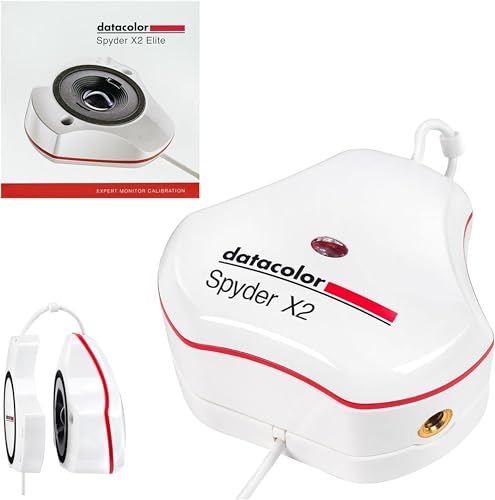
- Video and cinema calibration targets
- Unlimited settings and soft proofing
- Studio Match for multiple monitors
Best For: Advanced photo, video, and digital design work
Legacy Display Coverage

- Supports LED, OLED, LCD, and CRT
- Calibrates laptops and projectors
- Includes automated recalibration assistance
Best For: Mixed or legacy display environments
Advanced Display Control

- Fast standard or deeper grayscale calibration
- Supports displays up to 12,000 nits
- Includes analysis, LUT, projector, and multi-monitor tools
Best For: Professionals managing advanced multi-display workflows
Capture-to-Display Accuracy

- Calibrates displays up to 10,000 nits
- Includes ColorChecker Passport Video 2
- Supports camera matching, exposure, and white balance
Best For: Photographers and videographers needing an end-to-end color workflow
Best Photo Workflow Kit
Calibrite Photo Kit with Display Pro HL

- Combines monitor and camera profiling tools
- Includes ColorChecker Passport Photo 2
- Supports RAW profiles and white-balance references
Best For: Photographers managing color from capture through editing
Best Simple Setup

- Uses a guided Easy 1 2 3 workflow
- Supports calibration for up to two displays
- Includes before-and-after comparison
Best For: Creators who want simple, approachable monitor calibration
Best Beginner Pick – Spyder X Pro
The Datacolor Spyder X Pro is one of the most approachable monitor calibrators for photographers and other first-time users. Its lens-based color engine, guided workflow, and quick calibration process are designed to improve color accuracy across compatible desktop and laptop displays.
Best For: First-time users who want straightforward monitor calibration for photographic images and multiple displays.
Pros:
- Single-click calibration and a wizard workflow help simplify setup.
- Offers 12 predefined calibration targets for more controlled color accuracy.
- Supports room-light monitoring, automatic profile changing, and multiple monitors.
- SpyderProof provides a before-and-after comparison using your own images.
Cons:
- Its feature set is oriented toward ease of use rather than advanced video-focused controls.
- Calibration support is listed for desktop and laptop monitors, not phones.
Choose the Spyder X Pro if you want a quick, guided entry into display calibration without needing to be a color expert. It is a practical fit for photographers building a consistent desktop or laptop workflow.
Projector-Friendly Choice – ColorChecker Display Pro
The Calibrite ColorChecker Display Pro is a versatile choice among monitor calibrators, with software support through ccProfiler or i1Profiler. Its optical design emphasizes repeatable profiling across different display types, while the diffuser arm and tripod mount extend its usefulness to projector calibration and ambient-light measurement.
Best For: Users who need repeatable monitor profiling plus occasional projector calibration.
Pros:
- Optical design supports high repeatability on the same display and across display types.
- Rotatable diffuser arm doubles as a tabletop projector stand and protects the optics.
- Includes a tripod mount for projector profiling in larger venues.
- Works with ccProfiler or i1Profiler software.
Cons:
- Software setup may require choosing between ccProfiler and i1Profiler.
- Its broader projector-oriented features may be unnecessary for users calibrating only one monitor.
The ColorChecker Display Pro stands out when calibration needs go beyond a single desktop display. Consider it if repeatability and projector support matter as much as everyday monitor profiling.
Advanced Hybrid Workflow – Spyder X2 Elite
The Datacolor Spyder X2 Elite is a higher-end option for users who need more control from monitor calibrators. It adds video and cinema targets, advanced display analysis, unlimited calibration settings, soft proofing, and Studio Match for coordinating multiple monitors.
Best For: Photographers, video professionals, and digital designers managing advanced or multi-monitor color workflows.
Pros:
- Includes Rec. 709 and Rec. 2020 video and cinema targets.
- Provides advanced display mapping, analysis, soft proofing, and Studio Match.
- Supports both guided presets and customized calibration parameters.
- Uses native USB-C and includes a USB-A adapter.
Cons:
- Its advanced controls may be more than beginners need.
- Requires software activation using the included unique serial number.
If your work spans photography and video, the Spyder X2 Elite offers a more adaptable calibration toolkit than a basic monitor calibrator. It is especially compelling for users who need custom settings or consistent results across multiple displays.
Legacy Display Coverage – Spyder4Elite Colorimeter
The Datacolor Spyder4Elite is an older-style colorimeter for users seeking broad display compatibility. It supports automated color and brightness calibration for LED, OLED, LCD, and CRT displays, as well as laptops and front projectors, with a ReCAL assistant for easier repeat calibration.
Best For: Users working with a mix of display technologies, including older CRTs and front projectors.
Pros:
- Supports LED, OLED, LCD, and CRT displays.
- Can calibrate laptops and front projectors in addition to monitors.
- Full-spectrum color sensing and automated color and brightness calibration are included.
- ReCAL helps simplify recalibration as displays change over time.
Cons:
- The supplied listing provides limited information about software compatibility and workflow details.
- As an older Spyder4 model, it may be less suitable for buyers seeking the newest interface or connectivity features.
The Spyder4Elite remains relevant for specialized setups that include legacy display hardware. Confirm software and operating-system compatibility before choosing it over newer monitor calibrators.
Advanced Display Control – SpyderPro Monitor Calibrator
For photographers, designers, and video editors who need detailed control, this SpyderPro is one of the most capable monitor calibrators in the group. It combines fast standard calibration with deeper grayscale measurement, broad display support, and tools for analyzing multi-monitor setups.
Best For: Professionals calibrating multiple modern displays, projectors, or high-brightness OLED and Mini LED panels.
Pros:
- Standard calibration can deliver professional-grade results in about 90 seconds.
- Supports OLED, QD-OLED, Mini LED, Liquid Retina XDR, and brightness levels up to 12,000 nits.
- Includes display analysis, projector calibration, 3D LUT export, and multi-monitor matching tools.
- Offers USB-C connectivity with a USB-A adapter and supports unlimited displays per computer capability.
Cons:
- Its extensive controls and analysis features may be more than casual users need.
- Requires a nonstandard battery.
Choose this model when calibration flexibility and display-analysis features matter as much as basic color accuracy. Its support for current high-brightness panels also makes it a strong long-term option for advanced workflows.
Capture-to-Display Accuracy – Calibrite Video Photo Kit
This Calibrite kit goes beyond monitor calibration by pairing a high-luminance Display Plus HL colorimeter with a ColorChecker Passport Video 2. It is designed to help photographers and videographers maintain consistent color from camera setup through editing and final delivery.
Best For: Photo and video creators who need both calibrated displays and on-set camera, white-balance, and exposure references.
Pros:
- Display Plus HL measures monitors up to 10,000 nits, including Mini LED, OLED, and Apple XDR panels.
- ColorChecker Passport Video 2 supports white balance, exposure checks, camera matching, and color reference.
- Supports consistent workflows across multiple cameras, monitors, and software platforms.
- Includes a protective case, lanyard, USB-C to USB-A adapter, and access to PROFILER software.
Cons:
- The kit may be excessive for users who only need monitor calibration.
- PROFILER software requires a download.
- Its listed compatibility is limited to Windows and macOS.
For creators who need reliable color at both capture and post-production stages, this is a more complete solution than a standalone colorimeter. The included reference target adds practical value for mixed-lighting and multi-camera work.
Simple Color Confidence – Datacolor Spyder Monitor Calibrator
This Datacolor Spyder is a straightforward choice among monitor calibrators, offering a quick setup and an intuitive workflow for accurate viewing and editing. It supports newer OLED, Mini LED, and Apple Liquid Retina XDR displays while adapting recommendations to changing room light.
Best For: Beginners and everyday photo editors who want fast, guided monitor calibration with useful ambient-light support.
Pros:
- Provides an accurate starting point in about 90 seconds.
- Supports laptop and desktop displays, including OLED, Mini LED, and Apple Liquid Retina XDR.
- Offers preset calibration for beginners alongside customizable settings for experienced users.
- Ambient-light monitoring can warn when recalibration is needed or adjust profiles automatically.
Cons:
- Does not list the SpyderPro model’s deeper calibration, 3D LUT, or projector features.
- Requires a nonstandard battery.
- DevicePreview is identified as a beta feature.
This model is a sensible pick when ease of use matters more than advanced measurement and export features. Its quick calibration and room-light guidance make it approachable for home studios and general editing setups.
Best High-Brightness Pick – Calibrite Display Pro HL
For creators working with bright LCD, mini-LED, OLED, or HDR-capable displays, the Calibrite Display Pro HL is one of the more capable monitor calibrators in this roundup. Its high-luminance sensor measures up to 3,000 nits, while PROFILER software provides both guided and advanced controls for creating repeatable display profiles.
Best For: Photographers, designers, and studios that need detailed control and support for high-brightness modern displays.
Pros:
- Measures displays up to 3,000 nits, including compatible high-brightness panels.
- Supports LCD, mini-LED, OLED, Apple XDR displays, and compatible projectors.
- Includes validation, uniformity, flare-correction, and multi-display workflow tools.
- Offers customizable targets and patch sets through Calibrite PROFILER.
Cons:
- Its advanced controls may be more than casual users need.
- Requires a Mac or Windows computer and software-based setup.
The Display Pro HL is the strongest choice here for demanding color workflows, especially when screen brightness, HDR capability, or multi-monitor consistency matters. It is a practical investment for users who want measurement depth rather than only a simplified calibration process.
Best Photo Workflow Kit – Calibrite Photo Kit with Display Pro HL
The Calibrite Photo Kit combines monitor calibration with camera-color management, making it a broader solution than monitor calibrators alone. It pairs the Display Pro HL with ColorChecker Passport Photo 2 to support a more consistent RAW capture-to-edit workflow, including custom camera profiles and white-balance references.
Best For: Photographers who want to manage color from camera capture through monitor-based editing.
Pros:
- Combines a high-luminance monitor colorimeter with ColorChecker Passport Photo 2.
- Supports custom camera profiles for RAW still photography.
- Helps establish repeatable white-balance and exposure references.
- Includes PROFILER software for monitor calibration and adjustable targets.
Cons:
- Includes photography tools that may be unnecessary for users who only need monitor calibration.
- Its broader workflow focus may be less convenient for simple display-only setups.
This kit makes the most sense when camera profiling is part of the job. By combining capture references with the Display Pro HL, it can reduce color guesswork across photography sessions and editing environments.
Best Simple Setup – Calibrite Display 123
For users who want a straightforward entry into monitor calibrators, the Calibrite Display 123 emphasizes a guided Easy 1 2 3 software workflow. It supports up to two displays, offers Native or Photo brightness targets, and includes a before-and-after comparison so you can quickly check the effect of calibration.
Best For: Photographers and creators who want accessible calibration without a heavily customized setup.
Pros:
- Guided Easy 1 2 3 workflow is designed for approachable setup.
- Calibrates up to two displays for a matched dual-monitor workspace.
- Includes Native and Photo brightness target options.
- Before-and-after checking makes calibration results easy to review.
Cons:
- Offers fewer advanced profiling controls than the Display Pro HL.
- Its listed support is limited to two displays.
The Display 123 is a sensible pick for home offices and small creative workspaces where ease of use matters most. Choose it over a more advanced model when you want dependable basic calibration and quick visual confirmation rather than extensive customization.
How We Picked the Best Monitor Calibrators
We selected these Monitor Calibrators based on their intended users, supported display types, calibration controls, software workflow, brightness capability, and overall suitability for photography, video, and design. The list includes approachable tools for casual editing as well as advanced colorimeters for professional displays and HDR workflows.
We also considered whether each option is sold as a standalone device or bundled with useful accessories such as camera color targets. A colorimeter can improve display accuracy, but its value depends on software support, monitor compatibility, and how consistently you use it.
Quick Comparison
| Best For | Recommended Type | What to Look For |
|---|---|---|
| Casual photo editing | Simple entry-level calibrator | Guided software and USB compatibility |
| Serious photography | Professional colorimeter | Fine controls and profile management |
| Video and HDR | High-brightness calibrator | Support for modern LCD, Mini-LED, and OLED displays |
| Camera-to-screen workflows | Photo or video kit | Display calibration plus a color reference target |
Key Buying Factors for Monitor Calibrators
Display Technology and Brightness
Check whether the device and its software support your panel type. Standard LCD monitors may need different handling from wide-gamut, Mini-LED, or OLED screens. If you edit HDR video or use a very bright display, choose a model designed for higher luminance rather than a basic colorimeter.
Software and Controls
Calibration hardware is only half the system. Look for software that supports your operating system, monitor connection, color spaces, white-point settings, gamma, and multiple display profiles. More advanced controls are useful for matching screens or working to a specific delivery standard.
Workflow and Portability
USB connectivity, sensor placement, ambient-light features, and setup guidance affect everyday convenience. If you travel with a laptop or work across several displays, a compact device and straightforward software can matter more than advanced options you will rarely use.
Included Color Targets
Photo and video bundles may include a ColorChecker target. This does not replace display calibration, but it can help create more consistent camera color and provide a useful reference during capture and editing.
Who Should Buy Which Monitor Calibrators?
Choose an entry-level model if you mainly want more dependable color for occasional photo editing and online work. A professional colorimeter is a better fit for photographers, designers, and studios that need repeatable profiles and greater control.
Video editors and HDR users should prioritize high-brightness support and compatibility with modern display technologies. If your work begins with a camera, a photo or video kit can deliver more value by combining screen calibration with a physical color reference.
Whichever model you choose, recalibrate after major display changes and at regular intervals. Keep the monitor warmed up, control room lighting, and use a consistent viewing environment to get the most reliable results from your monitor calibrator.