Microwave ovens with inverter technology provide steadier power than traditional on-and-off models, helping reduce cold centers, overcooked edges, and unevenly reheated food.
We compared ten countertop options across cooking power, capacity, controls, sensor features, flatbed designs, and added functions such as air frying. Use this guide to narrow the right fit for your kitchen, household, and cooking habits.
Best 10 Microwave Ovens with Inverter Technology Picks for 2026
Best Flatbed Pick
Toshiba 1.3 Cu. Ft. Inverter Microwave

- Flatbed, turntable-free interior
- 11 smart sensor menus
- 1,200W output with 11 power levels
Best For: Easy cleanup and flexible dish placement
Best Compact Value
Panasonic 1.2 Cu. Ft. Inverter Microwave
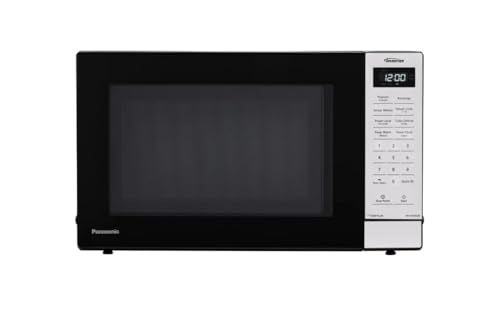
- 1,250W cooking power
- Sensor cook, reheat, and defrost
- 13.4-inch turntable
Best For: Compact everyday cooking on a renewed appliance budget
Best Multifunction Model
Toshiba OptiChef Pro Max Air Fryer Microwave

- Microwave, air-fry, and convection-style cooking
- 2.4-inch color touchscreen
- 25 cooking programs with humidity sensing
Best For: Replacing multiple countertop cooking appliances
Best High-Power Standard
Panasonic 1.2 Cu. Ft. Genius Sensor Microwave

- 1,250W output with inverter cooking
- Genius Sensor automatic adjustments
- Stainless steel exterior and 13.4-inch turntable
Best For: Fast, dependable everyday reheating and cooking
Large-Family Sensor Pick
TOSHIBA 2.2 Cu. Ft. Inverter Microwave

- 2.2-cu.-ft. capacity with a 16.5-inch turntable
- Humidity sensor and six automatic menus
- 1,200 watts with 10 power levels
Best For: Large households needing spacious, sensor-assisted cooking
Compact Everyday Value
Emerson 1.2 Cu. Ft. Inverter Microwave

- Compact 1.2-cu.-ft. countertop design
- 1,000 watts and 10 power levels
- Eight programs with push-open door
Best For: Small kitchens and everyday reheating
Quiet Sensor Mid-Size Pick
TOSHIBA 1.6 Cu. Ft. Inverter Microwave

- 1.6-cu.-ft. capacity with 1,250-watt output
- Six smart sensor menus and 10 power levels
- Sound-off function and two-step child lock
Best For: Families wanting sensor cooking in a mid-size format
Flatbed Precision Pick
Sharp 1.1 Cu. Ft. Inverter Microwave

- Even inverter power for consistent cooking
- Flatbed interior fits dishes up to 13.25 by 13 inches
- Express Cook, Auto Defrost, and child lock
Best For: Countertop users who want flexible flatbed space and simple controls
Everyday Menu Favorite
Frigidaire 1.1 Cu. Ft. Inverter Microwave

- Steady inverter power for precise cooking and defrosting
- Eight one-touch menus simplify common foods
- 10 power levels and a 12-inch turntable
Best For: Users who prioritize preset menus and everyday countertop convenience
Large-Capacity Sensor Choice
Toshiba 1.6 Cu. Ft. Inverter Microwave

- 1.6-cubic-foot capacity with a 13.6-inch turntable
- 1250 watts and inverter technology for even heating
- Six smart sensor menus plus Eco and mute modes
Best For: Families needing larger dish capacity and sensor-assisted cooking
Best Flatbed Pick – Toshiba 1.3 Cu. Ft. Inverter Microwave
For shoppers comparing microwave ovens with inverter technology, this Toshiba stands out for its flatbed interior and 1,200W output. The turntable-free design accommodates differently shaped dishes and simplifies cleanup, while sensor menus help automate everyday cooking.
Best For: Households that want a spacious, easy-to-clean countertop microwave without a turntable.
Pros:
- Flatbed interior fits various dish shapes and multiple plates without turntable noise.
- Origin Inverter technology supports even cooking and precise temperature control.
- Eleven smart sensor menus automatically adjust heating based on food moisture.
- Eleven power levels, mute function, eco mode, and child safety lock add flexibility.
Cons:
- It has no traditional turntable, which some users may prefer for familiar operation.
- The countertop body weighs 25.8 pounds and may require a sturdy placement area.
This is a practical choice if flatbed convenience is your priority. Its combination of inverter cooking, sensor programs, and generous 1.3-cubic-foot capacity makes it well suited to varied reheating and cooking tasks.
Best Compact Value – Panasonic 1.2 Cu. Ft. Inverter Microwave
This renewed Panasonic is a compact option among microwave ovens with inverter technology, combining 1,250W of power with automatic cooking functions. Its 13.4-inch turntable provides room for everyday plates, while sensor cooking and reheat programs reduce guesswork.
Best For: Budget-conscious shoppers seeking a compact renewed microwave with strong power and straightforward sensor controls.
Pros:
- Inverter Technology is designed for consistent heating from edges to center.
- 1,250W output and 10 power levels support fast, adjustable cooking.
- Sensor Cook, Sensor Reheat, and Auto Defrost automate common tasks.
- Keep Warm maintains food temperature until serving.
Cons:
- This is a renewed product with a 90-day limited warranty.
- The design uses a conventional turntable rather than a flatbed interior.
If you are comfortable buying renewed, this Panasonic offers a useful mix of high wattage, sensor convenience, and compact sizing. The shorter warranty is the main consideration compared with the other options here.
Best Multifunction Model – Toshiba OptiChef Pro Max Air Fryer Microwave
For shoppers wanting more than reheating, this Toshiba combines inverter microwave cooking with air-fry and convection-style functions. Its 2.4-inch color screen, humidity sensor, and 25 programs provide a more guided cooking experience than a basic countertop microwave.
Best For: Cooks who want microwave, air-fry, and convection-style capabilities in one countertop appliance.
Pros:
- Origin Inverter technology supports even cooking and moisture retention.
- ChefFry Plus uses a fan and heating element to replicate an air fryer oven.
- Color touchscreen interface and 25 programs simplify varied cooking tasks.
- 1.3-cubic-foot capacity fits a 13-inch pizza or a whole chicken.
Cons:
- At 21.8 inches wide and 17.8 inches deep, it needs substantial counter space.
- Its microwave output is 1,100W, lower than the 1,250W Panasonic models.
- Multifunction controls may be more involved than those on a basic microwave.
This is the most versatile choice in the group, particularly for kitchens that need air-frying and microwave functions together. Verify available counter space before buying, as its broader feature set comes with a larger footprint.
Best High-Power Standard – Panasonic 1.2 Cu. Ft. Genius Sensor Microwave
This Panasonic is a straightforward countertop choice for shoppers comparing microwave ovens with inverter technology. It pairs 1,250W of power with Genius Sensor cooking, a 13.4-inch turntable, and a stainless steel exterior for dependable everyday reheating, defrosting, and meal preparation.
Best For: Families wanting a high-power, sensor-equipped countertop microwave with a conventional turntable.
Pros:
- Inverter Technology delivers consistent power to help limit cold centers and overcooked edges.
- 1,250W output supports faster cooking and reheating.
- Genius Sensor adjusts time and power based on food moisture.
- Keep Warm, Turbo Defrost, express cook, and child safety lock add convenience.
Cons:
- The 1.2-cubic-foot capacity is smaller than the Toshiba flatbed model.
- The traditional turntable may be less convenient for unusually shaped dishes.
- Child lock is enabled when shipped and must be disengaged before normal use.
This Panasonic keeps the feature set focused on reliable everyday microwave cooking. It is a strong fit if you value high wattage, sensor automation, and a familiar turntable layout over multifunction cooking.
Large-Family Sensor Pick – TOSHIBA 2.2 Cu. Ft. Inverter Microwave
For shoppers seeking microwave ovens with inverter technology and generous capacity, this 2.2-cubic-foot Toshiba model combines 1,200 watts of output with humidity-sensor cooking. Its sensor programs and 16.5-inch turntable make it suited to larger meals and cookware.
Best For: Large households that want sensor-assisted cooking and a spacious countertop microwave.
Pros:
- Inverter technology is designed for even cooking, reheating, and defrosting.
- Humidity sensor adjusts power and cooking time to help avoid undercooking or overcooking.
- Large 2.2-cubic-foot capacity and 16.5-inch removable glass turntable.
- Six automatic sensor and cooking menus, plus 10 power levels.
Cons:
- Its 24.4-inch width and 33.5-pound weight require substantial counter space.
- The two-step child-lock procedure may take some getting used to.
This is the most spacious option in the group, with useful automation for family-size portions. Confirm the countertop dimensions before buying, especially if space is limited.
Compact Everyday Value – Emerson 1.2 Cu. Ft. Inverter Microwave
This Emerson is a practical choice among microwave ovens with inverter technology for smaller kitchens. The 1.2-cubic-foot countertop design provides 1,000 watts, 10 power levels, eight pre-programmed settings, and a straightforward LED display.
Best For: Apartments, offices, and households that need a compact microwave for everyday reheating and defrosting.
Pros:
- Inverter technology uses a consistent power level for more precise cooking.
- Compact 1.2-cubic-foot footprint with a removable glass turntable.
- Push-open door offers one-handed operation without a traditional handle.
- Includes 10 power levels, eight pre-programmed settings, and a 99-minute, 99-second timer.
Cons:
- Its 1,000-watt output and smaller capacity may be less suitable for large meals.
- The listed warranty is 90 days.
Emerson focuses on useful basics in a smaller package, making it easier to fit into limited counter space. It is best suited to routine cooking tasks rather than oversized dishes.
Quiet Sensor Mid-Size Pick – TOSHIBA 1.6 Cu. Ft. Inverter Microwave
For a middle ground between compact and oversized models, this Toshiba offers microwave ovens with inverter technology in a 1.6-cubic-foot format. It pairs 1,250 watts of output with sensor menus, auto defrosting, and a sound-off function for quieter operation.
Best For: Families wanting a mid-size microwave with sensor cooking and optional muted alerts.
Pros:
- Origin Inverter Technology supports even heating and defrosting.
- Six smart sensor menus adjust power for foods such as pizza, potatoes, and vegetables.
- 1,250 watts of output, 10 power levels, and a 13.6-inch glass turntable.
- Sound can be switched off, and a two-step child lock helps prevent unintended use.
Cons:
- The 13.6-inch turntable is smaller than the one in Toshiba’s 2.2-cubic-foot model.
- Its 21.8-inch width still needs more counter space than a compact microwave.
This model balances useful capacity and strong output without reaching the largest option’s footprint. The mute function is a practical advantage for households that prefer quieter appliance alerts.
Flatbed Precision Pick – Sharp 1.1 Cu. Ft. Inverter Microwave
Sharp SMC1174KS Flatbed Microwave Oven with Inverter Technology, 1.1 cu. ft., 1100W, Stainless Steel
Check Price On AmazonThe Sharp SMC1174KS is a practical choice if you want microwave ovens with inverter technology and a flatbed interior. Its 1.1-cubic-foot capacity, 1100 watts of cooking power, and steady power distribution suit everyday reheating, cooking, and defrosting.
Best For: Countertop kitchens that value usable flatbed space, straightforward controls, and easy defrosting.
Pros:
- Inverter technology distributes cooking power evenly for more consistent results.
- Flatbed design accommodates dishes up to 13.25 by 13 inches without a turntable.
- Express Cook, +30, preset buttons, Auto Defrost, LED lighting, and a child lock add convenience.
Cons:
- Its 1.1-cubic-foot capacity is smaller than the Toshiba model in this roundup.
- The supplied specifications list wattage as both 1100 watts in the title and 1000 watts in the details.
The flatbed layout is the main differentiator here, making the Sharp a strong fit when dish flexibility and simple daily operation matter more than maximum capacity.
Everyday Menu Favorite – Frigidaire 1.1 Cu. Ft. Inverter Microwave
FRIGIDAIRE Microwave Oven, Inverter Technology, Multi Function, Programmable, 1.1 Cu Ft 1000-Watt
Check Price On AmazonThe Frigidaire EMW122 is a compact option among microwave ovens with inverter technology, combining steady cooking power with 1.1 cubic feet of interior space. Its 1000-watt output, 10 power levels, and one-touch menus cover common countertop cooking tasks.
Best For: Households seeking convenient preset cooking for snacks, beverages, vegetables, and everyday meals.
Pros:
- Inverter technology provides a steady stream of power to help reduce hot spots and overcooked edges.
- Eight one-touch menus cover popcorn, pizza, vegetables, beverages, meat, and bread.
- Offers 10 power levels, a 12-inch turntable, touch controls, and a child safety lock.
Cons:
- The 1.1-cubic-foot capacity is less spacious than the Toshiba’s 1.6-cubic-foot interior.
- It uses a conventional turntable rather than a flatbed design.
With its broad menu selection and familiar turntable layout, the Frigidaire emphasizes ease of use and dependable everyday versatility in a mid-size countertop package.
Large-Capacity Sensor Choice – Toshiba 1.6 Cu. Ft. Inverter Microwave
The Toshiba ML-EM45PIT(SS) stands out among microwave ovens with inverter technology for its larger 1.6-cubic-foot capacity and 1250-watt cooking power. Smart sensor menus, auto defrost, and a 13.6-inch removable turntable make it well suited to larger dishes and frequent meal preparation.
Best For: Families and cooks who need extra interior room, sensor-assisted cooking, and space for a 12-inch pizza.
Pros:
- Large 1.6-cubic-foot interior and 13.6-inch turntable accommodate larger meals and dishes.
- Inverter technology supports even heating and defrosting, while smart sensors adjust power for selected foods.
- Includes six sensor menus, quick start, Eco mode, mute function, and a child safety lock.
Cons:
- Its footprint is larger and deeper than the other listed models, and it needs 1 inch of clearance behind it.
- The control panel is not backlit.
The Toshiba is the strongest capacity-focused option here, pairing inverter cooking with sensor automation and useful sound and energy-saving controls.
How We Picked the Best Microwave Ovens with Inverter Technology
We evaluated these models by focusing on the features that matter during everyday use: inverter power delivery, wattage, interior capacity, control layout, preset programs, sensor cooking, cleanup, and countertop footprint. We also considered practical differences between turntable and flatbed designs, as well as useful extras such as air-fry functions, auto defrost, removable glass trays, and programmable settings.
Because specifications vary by model, check the product listing for exact dimensions, electrical requirements, included accessories, and whether a model is new or renewed before buying.
Quick Comparison
| Feature | What to Look For | Best For |
|---|---|---|
| Capacity | 1.1–1.3 cu. ft. | Most apartments, couples, and small families |
| Capacity | 1.6–2.2 cu. ft. | Large dishes, family meals, and frequent use |
| Power | 1,000–1,250W | Faster heating and stronger everyday performance |
| Interior design | Turntable or flatbed | Turntables for familiar heating; flatbeds for easier loading and cleanup |
| Special functions | Sensor cooking, air frying, presets | More automated or versatile meal preparation |
Key Buying Factors for Microwave Ovens with Inverter Technology
Power and Capacity
Higher wattage generally heats food faster, although cooking results also depend on portion size and cookware. A 1.1- to 1.3-cubic-foot microwave suits standard plates, bowls, and reheating tasks. Choose 1.6 cubic feet or more if you regularly use large casserole dishes or cook for several people.
Inverter Performance
Inverter systems regulate power more continuously instead of repeatedly switching between full power and off. This can be especially useful for delicate foods, defrosting, melting, simmering, and reheating leftovers without drying them out.
Controls and Sensor Cooking
Look for clearly labeled controls, a readable display, multiple power levels, and one-touch presets for foods you prepare often. Smart sensor programs can simplify cooking by adjusting time based on detected humidity, but manual controls remain valuable for precise results.
Flatbed Versus Turntable
Flatbed models make it easier to fit rectangular containers and wipe the cavity clean. Traditional turntables help rotate food automatically and remain familiar for general reheating. Consider your most-used dishes rather than assuming one layout is universally better.
Counter Space and Maintenance
Measure the available countertop area, including clearance around the ventilation openings. Stainless-steel finishes can complement other appliances, while removable trays and simple interiors make regular cleaning easier.
Who Should Buy Which Microwave Ovens with Inverter Technology?
Choose a compact 1.1- to 1.3-cubic-foot model if you want an everyday reheating appliance for a smaller kitchen. Larger Toshiba options are better suited to families, oversized plates, and batch cooking. Panasonic models are worth considering if sensor cooking and straightforward everyday controls are priorities.
Pick a flatbed microwave if flexible loading and easy cleanup matter most. An air-fryer combo makes sense for shoppers who want crisping and microwave cooking in one appliance, but it may require more counter space and a larger budget. Finally, a renewed model can offer useful savings, provided you confirm its condition, warranty, return policy, and included accessories.