Processing tomatoes by hand is slow, messy, and difficult to scale. The right press can separate skins and seeds while producing smooth sauce far more efficiently.
We compared 10 manual and electric options for home preserving, garden harvests, and heavier seasonal workloads, focusing on throughput, durability, cleanup, and ease of use.
Best 10 Tomato Presses for Large Batches Picks for 2026
Heavy-Duty Italian Electric Press
Reber N.3 450W Tomato Strainer

- Up to 309 lb of tomatoes per hour
- Continuous-duty induction motor
- Cast iron and stainless-steel construction
Best For: Large-batch preserving and frequent sauce making
Compact Manual Kitchen Press

- Skins and seeds eject separately
- Suction-cup base and steel pusher
- Useful for juice, puree, and salsa
Best For: Smaller batches and occasional home use
Large-Hopper Manual Sauce Maker
Weston Food Strainer and Sauce Maker
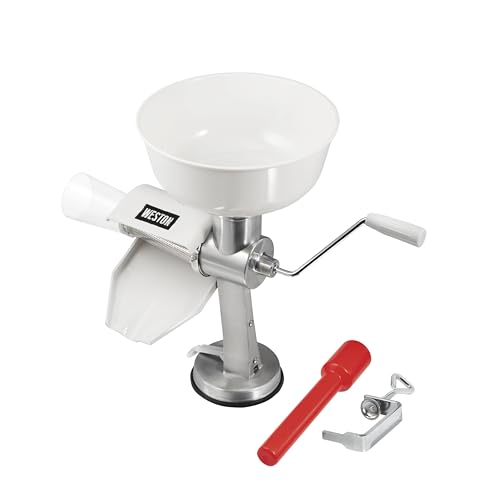
- Hopper holds about one gallon
- Suction-cup or C-clamp mounting
- Includes 1.5 mm stainless-steel screen
Best For: Manual canning and garden-harvest processing
High-Output Stainless Electric Press

- Rated up to 352.74 lb per hour
- 304 stainless-steel construction
- Dual-channel fine pulp-and-seed filter
Best For: Fast, high-volume tomato and fruit processing
Versatile Manual Pick
Johnny Apple Sauce Maker Model 250

- 1.3mm screen separates tomato skins and seeds
- Clamp fits countertops 3/4 to 2-1/8 inches thick
- Optional electric motor available separately
Best For: Flexible home processing beyond tomato sauce
Large-Hopper Manual Pick
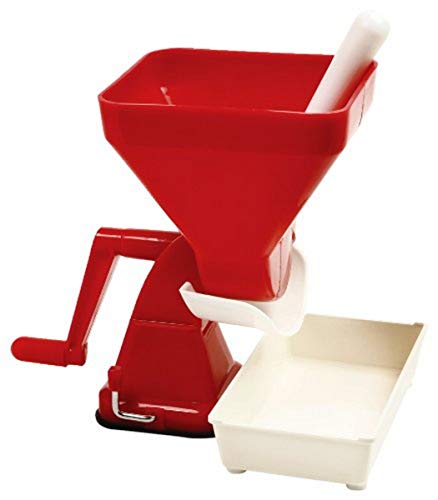
- 2.25-quart hopper for fewer refills
- Suction base stabilizes the unit on smooth surfaces
- Includes receiving tray and stainless steel mesh screen
Best For: Manual batch processing and canning preparation
Fastest Batch Processing
Weston Deluxe Electric Tomato Strainer

- 250-watt motor with forward and reverse speeds
- One-gallon hopper for bulk produce
- Three screens support smooth and chunky preparations
Best For: Large harvests and high-volume sauce processing
Commercial Batch Power
VBENLEM Electric Tomato Strainer
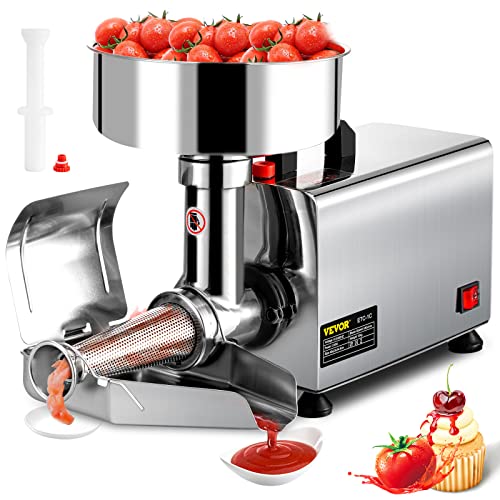
- 370W pure copper motor for large-batch processing
- 9-inch funnel and adjustable sauce trough
- Stainless-steel food-contact parts
Best For: High-volume sauce and jam processing
Harvest Season Efficiency
VEVOR Electric Tomato Strainer

- Processes up to a stated 200 pounds per hour
- Large hopper supports fewer refills
- Stainless filter separates skins and seeds
Best For: Bulk canning and smooth tomato sauce
Multifunction Kitchen Value

- Combines tomato straining with three other functions
- Includes three grinding plates and a reverse function
- Hand-wash design with safety lock and non-slip feet
Best For: Home cooks needing a versatile kitchen appliance
Heavy-Duty Italian Electric Press – Reber N.3 450W Tomato Strainer
For shoppers comparing tomato presses for large batches, the Reber N.3 stands out for its continuous-duty 450W induction motor and stated capacity of up to 309 pounds of tomatoes per hour. Its cast-iron body and stainless-steel processing components are suited to frequent sauce, preserve, jam, and juice making.
Best For: Large-batch home cooks who want a durable electric tomato strainer with continuous operation.
Pros:
- Processes up to 309 pounds of tomatoes per hour.
- Continuous 450W induction motor with a maintenance-free oil-bath gearbox.
- Food-safe cast iron, AISI 304 stainless steel, and heat-resistant acetal resin components.
- Optional attachments can expand its use beyond tomato processing.
Cons:
- At 21 pounds, it is less convenient to move than a compact manual press.
- Hand-wash care may add cleanup time after large sessions.
- Optional accessories are needed for functions beyond straining.
The Reber is a strong choice when throughput and long-term construction matter more than portability. Its Italian-made build and continuous motor make it particularly suitable for annual preserving projects and substantial harvests.
Compact Manual Kitchen Press – Suction-Mount Tomato Strainer
Among tomato presses for large batches, this manual strainer is best suited to buyers who value simple operation and a compact footprint. It separates skins and seeds to the side while juice or puree flows into the tray, with a suction base and included stainless-steel pusher for added control.
Best For: Home cooks who want an affordable manual press for tomatoes, salsa, puree, and occasional preserving.
Pros:
- Separates skins and seeds while collecting juice in the tray.
- Suction-cup base helps hold the food mill in place.
- Includes a stainless-steel pusher to guide tomatoes safely.
- Can strain, juice, and puree tomatoes without peeling, coring, or deseeding first.
Cons:
- Manual operation is more labor-intensive for very large harvests.
- Plastic construction may be less substantial than metal-bodied alternatives.
- The supplied notes do not specify a processing capacity or throughput rate.
This press offers straightforward, low-tech processing for everyday kitchen projects. It can handle fresh tomato preparation effectively, but buyers processing hundreds of pounds may prefer an electric model with a published hourly output.
Large-Hopper Manual Sauce Maker – Weston Food Strainer and Sauce Maker
Weston Food Strainer and Sauce Maker for Tomato, Fresh Fruits and Vegetables ,White
Check Price On AmazonFor tomato presses for large batches without an electric motor, the Weston Food Strainer offers a practical manual design with an extra-large hopper holding approximately one gallon of produce. Its dual-mount system supports either suction-cup or C-clamp setup, helping keep the unit stable during repeated turns of the handle.
Best For: Gardeners and home preservers who want a stable, high-capacity manual strainer for sauce and canning preparation.
Pros:
- Approximately one-gallon hopper reduces frequent refilling.
- Separates skins and seeds from tomato pulp.
- Dual mounting options include a suction cup and C-clamp.
- Includes a 1.5 mm stainless-steel screen and stomper.
Cons:
- Manual cranking can require more effort during large processing sessions.
- The supplied notes do not list an hourly throughput figure.
- Additional screen sizes are available separately rather than included.
The Weston is a useful middle ground for batch preparation: its large hopper and secure mounting are more harvest-friendly than a small manual mill, while its hand-powered design avoids relying on electricity. It is especially practical for canning, preserving, and home winemaking tasks.
High-Output Stainless Electric Press – 450W Tomato Sauce Maker
For tomato presses for large batches, this 450W electric sauce maker is designed around high throughput, with a stated processing range of approximately 198.42 to 352.74 pounds per hour. Its 304 stainless-steel construction, dual-channel design, fine filter, funnel, and trough support streamlined tomato and fruit processing.
Best For: High-volume home processing where speed, electric operation, and stainless-steel construction are priorities.
Pros:
- Rated to process approximately 198.42–352.74 pounds per hour.
- 450W pure copper motor supports high-volume work.
- Dual-channel fine filter separates pulp and seeds during processing.
- Includes an adjustable sauce chute, funnel, trough, and plunger.
Cons:
- At 10 kg, it is relatively heavy for a countertop appliance.
- Hand-wash care may make cleanup slower after large batches.
- Its 19.5-by-10-by-13.6-inch footprint requires dedicated counter or storage space.
This model is aimed at buyers who want speed without manually turning a handle. The published output range is among its strongest advantages, while the stainless-steel body and adjustable discharge setup add practical value for repeated sauce-making sessions.
Versatile Manual Pick – Johnny Apple Sauce Maker Model 250
If you want tomato presses for large batches but also need a tool for other produce, the Johnny Apple Sauce Maker offers a flexible hand-crank design. Its included 1.3mm apple/tomato screen separates skins and seeds for sauces, purees, juices, and more.
Best For: Home cooks who want a versatile manual strainer with a countertop clamp and the option to add an electric motor later.
Pros:
- Includes an apple/tomato screen, standard spiral, and instructions.
- Clamp mounts to countertops from 3/4 to 2-1/8 inches thick.
- Can be converted to optional electric-motor operation.
- Includes a 5-year warranty and BPA-free plastic components.
Cons:
- Manual cranking may require more effort for very large batches.
- The optional electric motor and additional screens are sold separately.
This is a practical choice when versatility matters more than maximum throughput. The clamp-based setup and upgrade path make it adaptable, though dedicated high-volume users may prefer an electric model.
Large-Hopper Manual Pick – Norpro Jumbo Tomato Strainer
For tomato presses for large batches without using electricity, the Norpro Manual Jumbo Tomato Strainer combines a spacious 2.25-quart hopper with a stainless steel mesh screen. It separates seeds, skins, and stems while directing puree into the included receiving tray.
Best For: Manual canning preparation when you want a larger hopper and suction-base stability for tomatoes, apples, sauces, or purees.
Pros:
- 2.25-quart hopper supports larger loads between refills.
- Stainless steel mesh screen separates skins, seeds, and stems.
- Suction base helps hold the strainer on smooth surfaces.
- Includes a fitted receiving tray, pestle, instructions, and starter recipes.
Cons:
- Manual operation still requires cranking for each batch.
- The suction base is designed for smooth countertops and tables.
The Norpro is a strong manual option for batch-oriented kitchen work, especially when counter stability and hopper size are priorities. Its included tray and accessories also make it convenient for canning preparation.
Fastest Batch Processing – Weston Deluxe Electric Tomato Strainer
Among tomato presses for large batches, the Weston Deluxe stands out for its 250-watt electric motor and 1-gallon hopper. It removes skins and separates seeds without coring, while forward and reverse speeds support continuous sauce and puree preparation.
Best For: Processing garden harvests or bulk produce efficiently for sauces, salsa, purees, jellies, and preserving.
Pros:
- One-gallon hopper handles substantial amounts of produce.
- 250-watt motor provides two speeds, including reverse to help prevent jams.
- Includes 1.5mm, 3mm, and 6mm stainless steel screens.
- Stomper helps feed produce into the hopper safely.
Cons:
- Requires access to a 120-volt power outlet.
- Includes a one-year manufacturer warranty.
The Weston is the clearest fit for high-volume processing because its electric motor and gallon-size hopper reduce manual work. Its three screens also make it more adaptable for smooth or chunky preparations.
Commercial Batch Power – VBENLEM Electric Tomato Strainer
For shoppers comparing tomato presses for large batches, the VBENLEM combines a 370W pure copper motor with a 9-inch feeding funnel and a stated processing capacity of up to 90–160 kg per hour. Its stainless-steel food-contact parts and adjustable discharge trough are designed for sauce-making efficiency.
Best For: High-volume tomato processing, sauce making, and fruit-jam preparation.
Pros:
- 370W pure copper motor for demanding batch processing.
- 304 stainless-steel food-contact components are easy to disassemble and clean.
- Large 9-inch funnel and adjustable trough support smoother feeding and discharge.
- Designed for sauces, ketchup, and fruit jams.
Cons:
- At 22 pounds, it is a substantial countertop appliance.
- The listed capacity and output range may vary with ingredients and preparation.
- It is a specialized machine rather than a multifunctional kitchen appliance.
The VBENLEM is a strong fit when throughput, stainless construction, and a large feed opening matter most. Its 110V design and 370W motor make it particularly practical for repeated harvest-season processing.
Harvest Season Efficiency – VEVOR Electric Tomato Strainer
The VEVOR is built for tomato presses for large batches, pairing a 370W motor with a large hopper and a stainless-steel filter that separates peels and seeds in one pass. Its stated 200-pound-per-hour output makes it suited to bulk sauce preparation and canning.
Best For: Harvest-season tomato processing, bulk canning, and smooth sauce or puree production.
Pros:
- Stainless filter screen separates seeds and skins for smoother sauce.
- Large hopper reduces the need for frequent refilling.
- Hopper, filter screen, juice tray, and guard use stainless steel.
- Core components disassemble without tools for quicker cleanup.
Cons:
- Tomatoes should be cut into smaller pieces to help reduce clogging.
- Its 21.7-pound weight may make storage and repositioning less convenient.
- The machine is focused on fruit and vegetable processing rather than general kitchen tasks.
Choose the VEVOR when easy maintenance and efficient separation are priorities. The large hopper and high stated output make it a practical option for frequent processing, while tool-free disassembly helps simplify cleanup.
Multifunction Kitchen Value – AIRMSEN Tomato Sauce Press
For buyers who want tomato presses for large batches plus other kitchen functions, the AIRMSEN combines tomato straining with meat grinding, sausage making, and kibbeh preparation. Its included tomato strainer kit and reverse function add versatility, though its supplied specifications list a 2 kg capacity and 300W wattage.
Best For: Home cooks who want one appliance for tomato sauce and several meat-preparation tasks.
Pros:
- Four-in-one design supports tomato sauce, meat grinding, sausage, and kibbeh preparation.
- Includes a tomato strainer kit and three grinding plates.
- Reverse function helps clear jams during operation.
- Non-slip feet and a safety lock support stable use.
Cons:
- It is not dishwasher safe; hand washing is recommended.
- The listed 2 kg capacity is less suited to continuous commercial-scale batches.
- Its tomato-processing output is not specified in pounds or kilograms per hour.
The AIRMSEN is the most versatile choice in this group, but it is better suited to home kitchens than dedicated high-throughput processing. Consider it when multifunctionality matters more than a clearly stated commercial tomato output.
How We Picked the Best Tomato Presses for Large Batches
We selected these tomato presses by comparing the features that matter most when processing substantial harvests: motor power, stated capacity, hopper and funnel design, strainer construction, stability, cleanup requirements, and the type of produce each machine can handle. The lineup includes compact manual models, household electric presses, and higher-capacity machines intended for frequent or commercial-style batches.
Because advertised output can vary with tomato variety, ripeness, preparation, and operator technique, treat capacity figures as useful comparisons rather than guaranteed results. A press that is easy to feed, empty, and clean may be more practical than one with a higher headline throughput.
Quick Comparison
| Best For | Look For | Why It Matters |
|---|---|---|
| Occasional preserving | Manual clamp or compact electric design | Lower cost and simpler storage |
| Large home gardens | 450W motor, stable base, generous hopper | Balances speed and household usability |
| Very heavy batches | Commercial-style metal components and high stated throughput | Reduces processing time during peak harvests |
| Mixed produce | Interchangeable screens or broad food compatibility | Allows use with fruits and vegetables beyond tomatoes |
Key Buying Factors for Tomato Presses for Large Batches
Capacity and Throughput
For large quantities, hopper size and continuous-feed performance are as important as motor wattage. Higher-capacity models can reduce pauses, but they also need enough counter space and a container positioned securely beneath the outlet.
Motor Power and Duty Cycle
Electric presses are generally faster and less tiring than manual models. A stronger motor is helpful for extended sessions, but check whether the manufacturer specifies a recommended operating cycle. Avoid overloading the hopper, and cut especially large tomatoes if the instructions require it.
Materials and Stability
Stainless steel or sturdy food-contact components are valuable for durability and cleanup. A clamp, suction feet, or broad base helps prevent movement while feeding produce. Confirm that replacement screens, augers, and other wear parts are available before buying.
Cleaning and Yield
Removable parts make the end of a batch much easier. Compare how quickly the screen can be cleared and whether components are dishwasher-safe. A fine screen may produce smoother sauce, while a coarser screen can process pulpy produce more quickly; the best choice depends on your preferred texture.
Who Should Buy Which Tomato Presses for Large Batches?
Choose a manual press if you process only a few batches each year, want quiet operation, or need a machine that stores easily. It is also a sensible backup when electricity is unavailable, though it requires more physical effort.
For most gardeners and home canners, a household electric model is the practical middle ground. Look for dependable feeding, easy disassembly, and enough power for repeated batches rather than choosing solely by the largest advertised output.
Buy a commercial-style electric press when you regularly process bushels of tomatoes or sell sauce and preserves. These machines can save substantial time, but their larger footprint, higher cost, and more involved cleaning routine make them excessive for occasional use. Among Tomato Presses for Large Batches, the best match is the one whose capacity, construction, and maintenance demands fit your actual harvest schedule.